
Winemaker Notes
Professional Ratings
-
Jeb Dunnuck
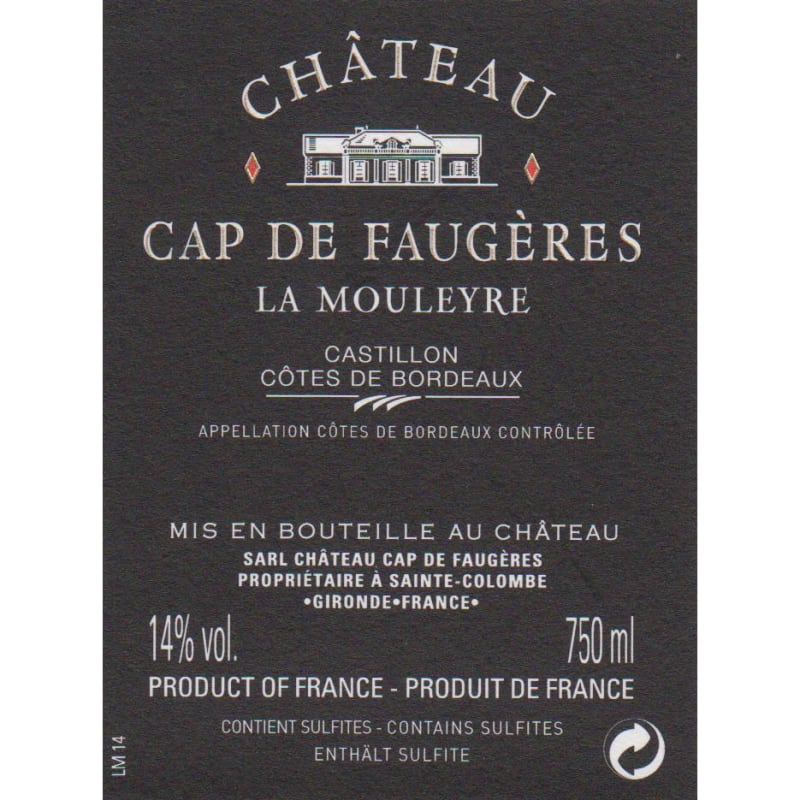
Coming from a small 4-hectare plot of limestone soils and a blend of 80% Merlot and 20% Cabernet Franc, the 2016 Château Cap de Faugères La Mouleyre is deeper colored and boasts a rock star bouquet of black and blue fruits, white truffle, graphite, and crushed rocks. This beautifully textured, layered, medium to full-bodied beauty has ripe tannins and a great finish, and is one seriously good mouthful of a Bordeaux. Drink it over the coming 15+ years.
-
James Suckling
This has good, aromatic clarity on the nose with a wealth of ripe dark plums and a fresh-earth thread. The palate has very attractive depth and presence with ripe dark-plum flavors, holding long and even. Try from 2022.
-
Robert Parker's Wine Advocate
The 2016 Mouleyre comes from a specific vineyard site cropped between 3-19 October. It has a rich and decadent bouquet, very pure and heady with creme de cassis and blueberry fruit, a little overripe. The palate is sweet and a little cloying with raisin-tinged black fruit, but it lacks some delineation and detail on the finish. Hedonistic for sure, but it feels rather generic and I much prefer the 2015.
Barrel Sample: 89-91 Points


One of the world’s most classic and popular styles of red wine, Bordeaux-inspired blends have spread from their homeland in France to nearly every corner of the New World. Typically based on either Cabernet Sauvignon or Merlot and supported by Cabernet Franc, Malbec and Petit Verdot, the best of these are densely hued, fragrant, full of fruit and boast a structure that begs for cellar time. Somm Secret—Blends from Bordeaux are generally earthier compared to those from the New World, which tend to be fruit-dominant.

Though the region is larger than many of its Right Bank neighbors, it is one that consistently produces high quality, well-valued red wines. In fact, Cotes de Castillon can almost be considered a geographical eastern extension of St. Emilion, producing similarly-fashioned reds based on Merlot.
Vineyards in the region’s clay, limestone and sandstone soils produce sturdy red wines. On alluvial terraces, in vineyards closer to the Dordogne River, wines tend to be more supple and fruity. In either case, a great Cotes de Castillon red will be bursting with raspberry, plum and blueberry, have an enticing bouquet of dried flowers and a finish that is plush and opulent.