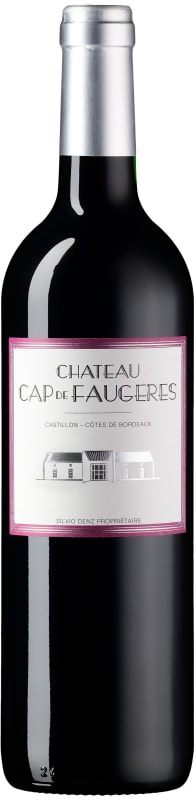


Winemaker Notes
Blend: 85% Merlot, 15% Cabernet Franc
The Barrel Sample for this wine is above 14% ABV.
Professional Ratings
-
Vinous
The 2019 Cap de Faugères has tightened up a lot on the nose, showing dense black fruit, tar and graphite scents, quite Left Bank in style. The palate is much more expressive, featuring fleshy red berry fruit mixed with allspice, clove and white pepper. Persistent and quite convincing on the finish. Give it time for those aromatics to get their mojo back – which they will.
-
Decanter
Pumped up but nicely balanced by freshness, this is full of dark fruits and is an enjoyable Castillon, without doubt one of the best of the appellation. Silvio Denz-owned estate, where the natural austerity of Castillon soils works well with the exuberance of his winemaking style.
Barrel Sample: 91 -
Robert Parker's Wine Advocate
Opaque purple-black colored, the 2019 Cap de Faugères delivers intense scents of prunes, Black Forest cake and ripe, fresh blackberries with hints of Marmite toast, tapenade, damp soil and truffles. The full-bodied palate delivers mouth-coating black fruit preserves with a velvety texture and tons of freshness, finishing long and earthy. Barrel Sample: 89-91
-
Jeb Dunnuck
Another perennial overachiever, Château Cap de Faugères delivers a brilliant, pleasure-bent wine year-in, year out. Their 2019 offers a juicy, up-front, savory, already complex style as well as notes of red and black fruits, new leather, herbes de Provence, and dried flowers. Mouth-filling, nicely structured, and medium-bodied, give it a year or two to shed some tannins and enjoy . Best after 2023.
-
Wine Spectator
Offers an earthy, old-school profile, with cast iron, tobacco and humus notes balanced out by black cherry and cassis fruit flavors. Nicely focused finish, with one last late tug of earth at the very end. Merlot, Cabernet Franc and Cabernet Sauvignon. Best from 2023.


One of the world’s most classic and popular styles of red wine, Bordeaux-inspired blends have spread from their homeland in France to nearly every corner of the New World. Typically based on either Cabernet Sauvignon or Merlot and supported by Cabernet Franc, Malbec and Petit Verdot, the best of these are densely hued, fragrant, full of fruit and boast a structure that begs for cellar time. Somm Secret—Blends from Bordeaux are generally earthier compared to those from the New World, which tend to be fruit-dominant.

Though the region is larger than many of its Right Bank neighbors, it is one that consistently produces high quality, well-valued red wines. In fact, Cotes de Castillon can almost be considered a geographical eastern extension of St. Emilion, producing similarly-fashioned reds based on Merlot.
Vineyards in the region’s clay, limestone and sandstone soils produce sturdy red wines. On alluvial terraces, in vineyards closer to the Dordogne River, wines tend to be more supple and fruity. In either case, a great Cotes de Castillon red will be bursting with raspberry, plum and blueberry, have an enticing bouquet of dried flowers and a finish that is plush and opulent.