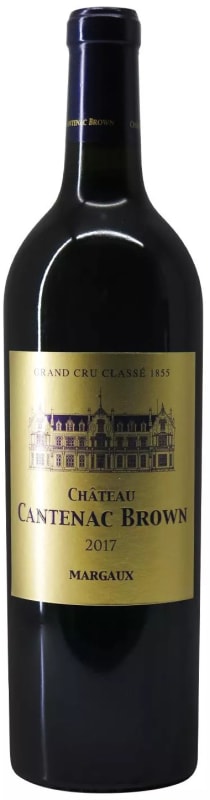


Winemaker Notes
Blend: 67% Cabernet Sauvignon and 33% Merlot
Professional Ratings
-
Wine Enthusiast
A lush wine packed with tannins and rich dark fruits, this will be dense and complex. Its solid structure is balanced with good acidity from the fruitiness. Drink from 2024
-
James Suckling
A solid core of fruit to this with blueberry and blackberry character. Plenty of chocolate as well. Medium to full body. Dense and flavorful for the vintage. Needs two or three years to come together. Better after 2021.
-
Decanter
This is an excellent Cantenac Brown, working extremely successfully with the vintage. It has precision and good flesh to the dark cassis and blackberry fruits, with layers of coffee, earth and the softest truffle notes that add complexity. Not as tightly knit as the 2016 for sure, but there is a lot to enjoy here, easy to recommend.
-
Jeb Dunnuck
The deep, inky-colored 2017 Château Cantenac Brown is beauty that shines in the vintage. Black and blue fruits, plenty of violets, charcoal and spice, medium body, and ripe tannin all make from a beautiful, charming, balanced Margaux that will drink nicely for 15-20 years.
Barrel Sample: 89-92 -
Robert Parker's Wine Advocate
With a larger proportion of Cabernet Sauvignon this year, the blend is 67% Cabernet Sauvignon and 33% Merlot. Deep garnet-purple in color, the 2017 Cantenac Brown leaps from the glass with exuberant notes of cassis, warm plums and black forest cake with touches of violets, dark chocolate, cloves and cigar box plus a waft of lavender. The palate is medium-bodied and firm with fine-grained tannins and tons of freshness, finishing with plenty of black fruit and perfumed layers.
Barrel Sample: 90-92 -
Wine Spectator
Warm and seductive in feel, with velvety plum sauce, blackberry puree and incense notes all melded together, flowing through a sandalwood- and black tea–tinged finish. Nicely done for the vintage. Cabernet Sauvignon and Merlot. Drink now through 2032.


One of the world’s most classic and popular styles of red wine, Bordeaux-inspired blends have spread from their homeland in France to nearly every corner of the New World. Typically based on either Cabernet Sauvignon or Merlot and supported by Cabernet Franc, Malbec and Petit Verdot, the best of these are densely hued, fragrant, full of fruit and boast a structure that begs for cellar time. Somm Secret—Blends from Bordeaux are generally earthier compared to those from the New World, which tend to be fruit-dominant.

Silky, seductive and polished are the words that characterize the best wines from Margaux, the most inland appellation of the Médoc on the Left Bank of Bordeaux.
Margaux’s gravel soils are the thinnest of the Médoc, making them most penetrable by vine roots—some reaching down over 23 feet for water. The best sites are said to be on gentle outcrops, or croupes, where more gravel facilitates good drainage.
The Left Bank of Bordeaux subscribes to an arguably outdated method of classification but it is nonetheless important in regards to history of the area. In 1855 the finest chateaux were deemed on the basis of reputation and trading price—at that time. In 1855, Chateau Margaux achieved first growth status, yet it has been Chateau Palmer (officially third growth from the 1855 classification) that has consistently outperformed others throughout the 20th century.
Chateau Margaux in top vintages is capable of producing red Cabernet Sauvignon based wines described as pure, intense, spell-binding, refined and profound with flavors and aromas of black currant, violets, roses, orange peel, black tea and incense.
Other top producers worthy of noting include Chateau Rauzan-Ségla, Lascombes, Brane-Cantenac, and d’Issan, among others.
The best wines of Margaux combine a deep ruby color with a polished structure, concentration and an unrivaled elegance.