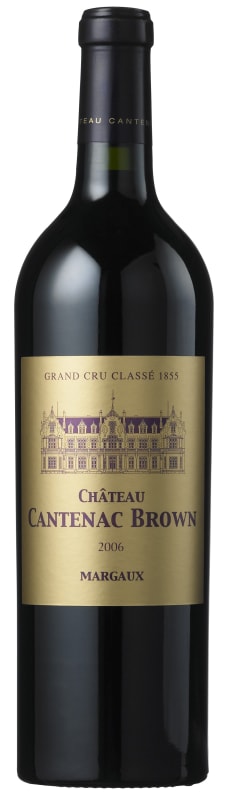


Winemaker Notes
The color is still fresh, deep and well concentrated. Aromas are slightly oaked and smoky with a hint of vanilla, specific of its noble aging. Then comes the fruit basket with aromas of blackberry, strawberry and cherry. The wine is very complex and a lot of other aromas do appear over the tasting. The attack is dense but soft on the palate with tannins of great quality. The wine of a great purity is very precise. It is unequivocally one of the great achievements of the vintage. Even if it can be appreciated today, it deserves to age a few years more.
Professional Ratings
-
Robert Parker's Wine Advocate
New owner, Syrian Simon Halabi, has instituted a severe selection process (only 35% of the production was utilized), resulting in what may be the finest Cantenac-Brown I have ever tasted. Halabi has given his staff carte blanche in order to get this estate back on track after a succession of good, but somewhat rustic, nearly overly tannic wines. The 2006 offers hints of lead pencil shavings intermixed with blueberry, blackberry, and pain grille aromas. The wine is dense, concentrated, and moderately tannic, with loads of pure fruit and medium to full body. Anticipated maturity: 2015-2030. Range: 90-92
-
Wine Spectator
This features deep aromas and flavors of cherry, leather, earth and wild herbs, allied to a firm structure. Succulent and lingering on the dusty, tobacco-tinged finish. Drink now through 2025.


One of the world’s most classic and popular styles of red wine, Bordeaux-inspired blends have spread from their homeland in France to nearly every corner of the New World. Typically based on either Cabernet Sauvignon or Merlot and supported by Cabernet Franc, Malbec and Petit Verdot, the best of these are densely hued, fragrant, full of fruit and boast a structure that begs for cellar time. Somm Secret—Blends from Bordeaux are generally earthier compared to those from the New World, which tend to be fruit-dominant.

Silky, seductive and polished are the words that characterize the best wines from Margaux, the most inland appellation of the Médoc on the Left Bank of Bordeaux.
Margaux’s gravel soils are the thinnest of the Médoc, making them most penetrable by vine roots—some reaching down over 23 feet for water. The best sites are said to be on gentle outcrops, or croupes, where more gravel facilitates good drainage.
The Left Bank of Bordeaux subscribes to an arguably outdated method of classification but it is nonetheless important in regards to history of the area. In 1855 the finest chateaux were deemed on the basis of reputation and trading price—at that time. In 1855, Chateau Margaux achieved first growth status, yet it has been Chateau Palmer (officially third growth from the 1855 classification) that has consistently outperformed others throughout the 20th century.
Chateau Margaux in top vintages is capable of producing red Cabernet Sauvignon based wines described as pure, intense, spell-binding, refined and profound with flavors and aromas of black currant, violets, roses, orange peel, black tea and incense.
Other top producers worthy of noting include Chateau Rauzan-Ségla, Lascombes, Brane-Cantenac, and d’Issan, among others.
The best wines of Margaux combine a deep ruby color with a polished structure, concentration and an unrivaled elegance.