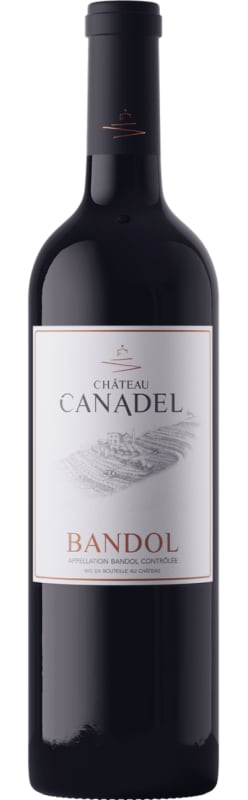


Winemaker Notes
Canadel is focused on making soulful, broad-spectrum, cinematic red wines befitting of the Bandol appellation. Only organic viticulture, and some biodynamic principles, are used in their vineyard, with all work done by hand on the terraces. All movement in the winery is by gravity flow, and wines are bottled unfiltered.
Blend: 70% Mourvèdre, 22% Cinsault, 5% Grenache. 3% Syrah
Professional Ratings
-
Wine & Spirits
Winemaker Laure Benoist and her husband, Vianney, an agronomist, took over this 37-acre estate in 2009; they released their first wines in 2014. We called out the couple for their early releases in our 2018 Wineries to Watch, and this latest rosé shows them building on their initial success. A blend of just 50 percent mourvèdre with 40 percent cinsault and 10 percent grenache, it’s on the light side of Bandol rosé, with pale, herb-inflected notes of cherry, orange and cantaloupe. But the texture is rich, with a glycerin smoothness that will make a sumptuous backdrop for grilled squid or stuffed tomatoes.


With bold fruit flavors and accents of sweet spice, Grenache, Syrah and Mourvèdre form the base of the classic Rhône Red Blend, while Carignan, Cinsault and Counoise often come in to play. Though they originated from France’s southern Rhône Valley, with some creative interpretation, Rhône blends have also become popular in other countries. Somm Secret—Putting their own local spin on the Rhône Red Blend, those from Priorat often include Merlot and Cabernet Sauvignon. In California, it is not uncommon to see Petite Sirah make an appearance.

Provence’s leader in concentrated and age-worthy red wines, Bandol is home to the dense, deep and earthy Mourvèdre grape. Like Châteauneuf-du-Pape, Bandol produces characterful reds that, while approachable in their youth, are typically designed for the cellar.
Given its coastal, Provencal situation, Bandol also naturally produces an assortment of charming, aromatic rosés made of Mourvèdre, Grenache and Cinsault.