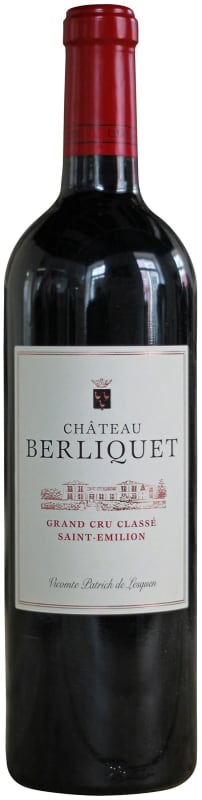


Winemaker Notes
Berliquet 2019 has an assertive character with a full and generous attack. Then the palate savors the density and tension, with delicate summer fruit aromas. The minerality of the terroir and the power of the clay evidence the wine's earthy character.
Blend: 77% Merlot, 23% Cabernet Franc
The Barrel Sample for this wine is above 14% ABV.
Professional Ratings
-
Robert Parker's Wine Advocate
The 2019 Berliquet is showing beautifully, wafting from the glass with aromas of cherries, wild berries, sweet spices, violets and forest floor. Medium to full-bodied, seamless and elegant, with terrific depth at the core, lively acids and ripe, powdery tannins, it concludes with a long, mineral finish. It's produced from a 9.5-hectare vineyard that encompasses three soil types: Saint-Émilion's limestone plateau (like its sibling, Château Canon); the slope, characterized by deep clay; and then sandy, colluvial soils at the foot of the slope. Right now it's planted with 70% Merlot and the balance Cabernet Franc, but the percentage of the latter is increasing as replanting progresses
-
Decanter
Vibrant damson in colour. I love the deep creaminess that is evident from the first nose, with hints of cocoa and gunsmoke. There is more clay here than at Canon; about 50% of the vineyard has a clay layer over the limestone whereas at Canon it is closer to 10%, meaning Berliquet is less ethereal, more urgent and powerful, still with precision and feathery chalky tannins. They have restored the underground limestone cellars for barrel ageing. A yield of 45hl/ha. 45% new oak, for what is the 2nd full year of the Canon team working the vineyard. Thomas Duclos consultant.
Barrel Sample: 93 -
James Suckling
Dark plums, baked blueberries, chocolate, lemon zest and sage on the nose. Medium-bodied with vibrant acidity and fine, sleek tannins. Fresh and focused with a pretty finish.
-
Jeb Dunnuck
The 2019 Château Berliquet shows the vintage’s pure, elegant, nicely focused style beautifully. Giving up lots of ripe black cherries, iron, hints of darker currants, tobacco, and loamy earth, it's medium-bodied, has a supple, balanced mouthfeel, polished tannins, and a great finish. I’d be happy to drink bottles any time over the coming 10-15 years or so.
-
Wine Spectator
Friendly in feel, with a rounded edge to the mix of plum, cassis and black cherry preserve flavors. Features a melted licorice snap note that drapes over the finish, with flickers of savory and chalky minerality adding nice contrast. Merlot and Cabernet Franc.


One of the world’s most classic and popular styles of red wine, Bordeaux-inspired blends have spread from their homeland in France to nearly every corner of the New World. Typically based on either Cabernet Sauvignon or Merlot and supported by Cabernet Franc, Malbec and Petit Verdot, the best of these are densely hued, fragrant, full of fruit and boast a structure that begs for cellar time. Somm Secret—Blends from Bordeaux are generally earthier compared to those from the New World, which tend to be fruit-dominant.

Marked by its historic fortified village—perhaps the prettiest in all of Bordeaux, the St-Émilion appellation, along with its neighboring village of Pomerol, are leaders in quality on the Right Bank of Bordeaux. These Merlot-dominant red wines (complemented by various amounts of Cabernet Franc and/or Cabernet Sauvignon) remain some of the most admired and collected wines of the world.
St-Émilion has the longest history in wine production in Bordeaux—longer than the Left Bank—dating back to an 8th century monk named Saint Émilion who became a hermit in one of the many limestone caves scattered throughout the area.
Today St-Émilion is made up of hundreds of independent farmers dedicated to the same thing: growing Merlot and Cabernet Franc (and tiny amounts of Cabernet Sauvignon). While always roughly the same blend, the wines of St-Émilion vary considerably depending on the soil upon which they are grown—and the soils do vary considerably throughout the region.
The chateaux with the highest classification (Premier Grand Cru Classés) are on gravel-rich soils or steep, clay-limestone hillsides. There are only four given the highest rank, called Premier Grand Cru Classés A (Chateau Cheval Blanc, Ausone, Angélus, Pavie) and 14 are Premier Grand Cru Classés B. Much of the rest of the vineyards in the appellation are on flatter land where the soils are a mix of gravel, sand and alluvial matter.
Great wines from St-Émilion will be deep in color, and might have characteristics of blackberry liqueur, black raspberry, licorice, chocolate, grilled meat, earth or truffles. They will be bold, layered and lush.