


Winemaker Notes
Carillon d’Angélus was first released in the 1987 vintage. Over the years it has acquired its very own identity. Reflecting the high, rigorous standards of their teams, the wine is a variable blend of Merlot, Cabernet Franc and Cabernet Sauvignon selected from different Saint-Emilion terroirs. The vinification and ageing techniques are adapted with precision to its particular style. It is highly appreciated for the purity of its fruit aromas, its velvety tannins and elegant finish.
Blend: 60% Merlot, 40% Cabernet Franc
Professional Ratings
-
Wine Enthusiast
Firm and tannic, very structured wine, while still savoring its rich fruit character. This feels very opulent and rich.
Barrel Sample: 91-93 -
Wine Spectator
Rather primal, with dark toasty cocoa, black currant jam and warm plum sauce notes that are still wrestling with one another, while charcoal-laden grip strides through on the finish, closing it down quickly. Needs to unwind a bit in the cellar.
-
James Suckling
The clarity of fruit in this second wine is impressive, with blackberries and dark chocolate, full body, and silky tannins.
Barrel Sample: 90-91
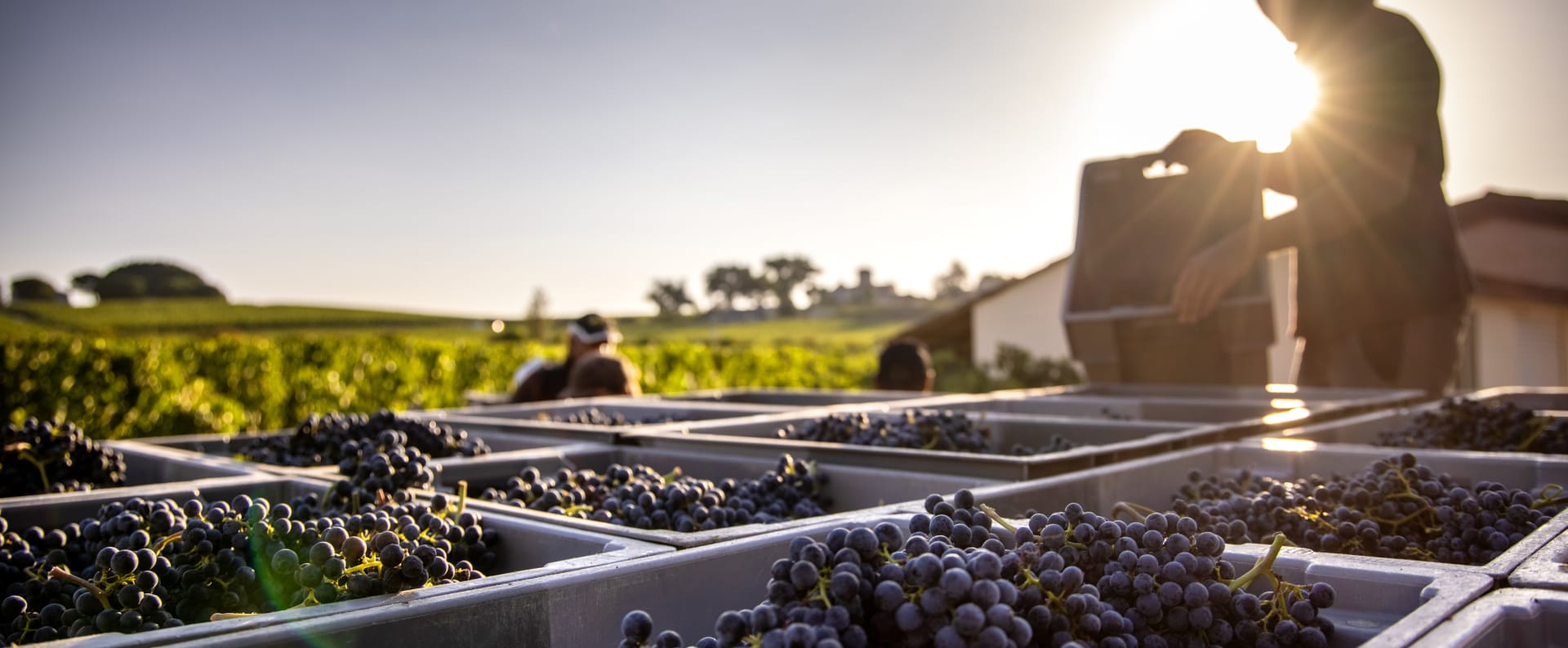


At the origin of Angelus is an exceptionally well-situated vineyard, at the gates to the village of Saint-Émilion, on the famous south-facing "foot of the slope". Since 1782, over the generations, the passion and determination of the de Boüard de Laforest family have built a destiny worthy of the Estate. At 131 hectares including 62 hectares in Saint-Émilion, of which 31 hectares from the historic heart of the Estate, Angelus is now one of the largest vineyards in the appellation. In 2012, after more than thirty years at the helm of Angelus, Hubert de Boüard de Laforest passed the baton to his daughter, Stéphanie de Boüard-Rivoal. She became the third woman in the family's nearly 250-year history to preside over the destiny of this emblematic Estate, ensuring its legacy continues to thrive. Today, Angelus employs 170 people, produces 8 cuvées and owns restaurants and hotels, in particular, the Logis de la Cadène in Saint-Émilion and Le Gabriel in Bordeaux. In 2023, diversification continued with the creation of La Ferme 1544, forming a link between Château Angelus wine business and its restaurants.

One of the world’s most classic and popular styles of red wine, Bordeaux-inspired blends have spread from their homeland in France to nearly every corner of the New World. Typically based on either Cabernet Sauvignon or Merlot and supported by Cabernet Franc, Malbec and Petit Verdot, the best of these are densely hued, fragrant, full of fruit and boast a structure that begs for cellar time. Somm Secret—Blends from Bordeaux are generally earthier compared to those from the New World, which tend to be fruit-dominant.

Marked by its historic fortified village—perhaps the prettiest in all of Bordeaux, the St-Émilion appellation, along with its neighboring village of Pomerol, are leaders in quality on the Right Bank of Bordeaux. These Merlot-dominant red wines (complemented by various amounts of Cabernet Franc and/or Cabernet Sauvignon) remain some of the most admired and collected wines of the world.
St-Émilion has the longest history in wine production in Bordeaux—longer than the Left Bank—dating back to an 8th century monk named Saint Émilion who became a hermit in one of the many limestone caves scattered throughout the area.
Today St-Émilion is made up of hundreds of independent farmers dedicated to the same thing: growing Merlot and Cabernet Franc (and tiny amounts of Cabernet Sauvignon). While always roughly the same blend, the wines of St-Émilion vary considerably depending on the soil upon which they are grown—and the soils do vary considerably throughout the region.
The chateaux with the highest classification (Premier Grand Cru Classés) are on gravel-rich soils or steep, clay-limestone hillsides. There are only four given the highest rank, called Premier Grand Cru Classés A (Chateau Cheval Blanc, Ausone, Angélus, Pavie) and 14 are Premier Grand Cru Classés B. Much of the rest of the vineyards in the appellation are on flatter land where the soils are a mix of gravel, sand and alluvial matter.
Great wines from St-Émilion will be deep in color, and might have characteristics of blackberry liqueur, black raspberry, licorice, chocolate, grilled meat, earth or truffles. They will be bold, layered and lush.