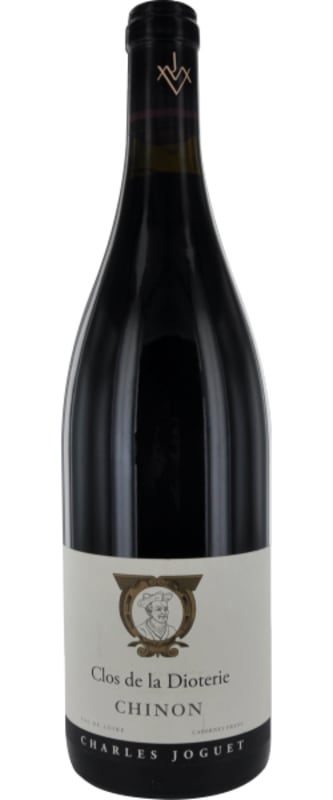


Winemaker Notes
Clos de la Dioterie is the essence of finesse: a harmony of ripe fruit aromas followed by silky spice on the palate; the freshness of a just-ripe blackberry and a trace of vanilla to soften the acidity. A wine that is easy to call pretty, in the most charming sense of the word.
Professional Ratings
-
Wine Enthusiast
Old vines from a single vineyard next to the producer's winery have made a rich and dense wine. Powerful tannins march with the ripe, perfumed black fruits and strongly mineral acidity. This wine will take time to mature. Drink from 2022.
-
Robert Parker's Wine Advocate
The monopole 2016 Chinon Clos de la Dioterie is deeply aromatic on the nose, which is pretty precise and elegant in its transparent but perfectly ripe and concentrated red and black cassis aromas. Smooth, round and juicy on the palate, this is a refreshing Dioterie with fine tannins and a long and tight finish. The 2016 will develop very well, because all its components are of high quality. Rating : 93+


Cabernet Franc, a proud parent of Cabernet Sauvignon, is the subtler and more delicate of the Cabernets. Today Cabernet Franc produces outstanding single varietal wines across the wine-producing world. Somm Secret—One of California's best-kept secrets is the Happy Canyon appellation of Santa Barbara. Here Cabernet Franc shines as a single varietal wine or in blends, expressing sumptuous fruit, savory aromas and polished tannins.

An important red wine appellation in the Touraine district of the Loire, Chinon produces fanciful, light-bodied reds from the Cabernet Franc grape. Chinon also makes charming rosés from the same grape as well as white wines from Chenin blanc. But the reds give the area its fame. Often scented with fresh herbs, black tea and violets, Chinon reds show a lovely combination of fruit and acidity. However, styles have become more concentrated and ripe in recent years from improvements in vineyard management. Modern methods include planting grass between vineyard rows, using higher trellises and deleafing to increase sunlight to berries and therefore improve ripening. Even still, red Chinon is intended to be a light to medium bodied, refreshing wine to be enjoyed in its youth.
Fuller-bodied Chinons come from vineyard sites on the clay and tuffeau limestone slopes, usually from the southern exposed slopes of Cravant-les-Coteaux, and the plateau above Beaumont. Lighter styled wines come from the sand and gravel vineyards near the Loire or Vienne Rivers with the most refined examples coming from the area around Panzoult