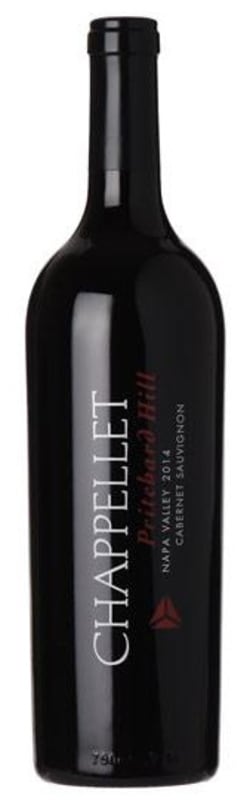


Winemaker Notes
Professional Ratings
-
James Suckling
So tight, concentrated and intense, this will benefit from several more years to reach a great plateau for peak drinking. Cocoa powder tannins, dark chocolate, espresso bean, tight black cherries and black currants, hints of mint and tobacco.
-
Robert Parker's Wine Advocate
Drinking beautifully, the 2014 Cabernet Sauvignon Pritchard Hill boasts classic aromas of mint, sage and ripe cherries. I don't see it as being quite as long-lived as previous reviewers, but the quality is definitely at an extremely high level. Full-bodied, it's supple, creamy and lush on the palate yet still shows ample freshness and vivacity and a long, silky finish.





The Chappellets' romance with Pritchard Hill began when Donn and Molly Chappellet first glimpsed the mountain's spectacular vistas in the late 1960s. Inspired by the notion that Bacchus loves the hills, Donn and Molly followed the advice of legendary winemaker André Tchelistcheff and settled on the rocky eastern slopes of the Napa Valley. There, on the mountain’s serene and picturesque hillsides, the Chappellets established their home and winery, raising their children and cultivating the vineyards.
Since being founded by Donn and Molly in 1967, Chappellet has earned acclaim championing the robust power and complexity of wines crafted from mountain grapes. At the same time, Chappellet has helped to establish Pritchard Hill as one of California’s most revered winegrowing sites. To honor the mountain's rich, expressive character, the winemaking team focuses on creating extraordinary, age-worthy Cabernet Sauvignons that embody the intensity and finesse of fruit from Pritchard Hill.

One of the most prestigious wines of the world capable of great power and grace, Napa Valley Cabernet is a leading force in the world of fine, famous, collectible red wine. Today the Napa Valley and Cabernet Sauvignon are so intrinsically linked that it is difficult to discuss one without the other. But it wasn’t until the 1970s that this marriage came to light; sudden international recognition rained upon Napa with the victory of the Stag’s Leap Wine Cellars 1973 Cabernet Sauvignon in the 1976 Judgement of Paris.
Cabernet Sauvignon undoubtedly dominates Napa Valley today, covering half of the land under vine, commanding the highest prices per ton and earning the most critical acclaim. Cabernet Sauvignon’s structure, acidity, capacity to thrive in multiple environs and ability to express nuances of vintage make it perfect for Napa Valley where incredible soil and geographical diversity are found and the climate is perfect for grape growing. Within the Napa Valley lie many smaller sub-AVAs that express specific characteristics based on situation, slope and soil—as a perfect example, Rutherford’s famous dust or Stags Leap District's tart cherry flavors.