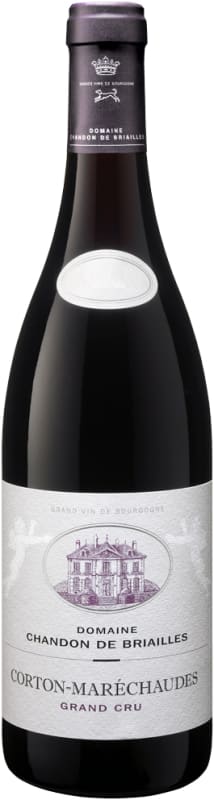


Winemaker Notes
Located just below Corton Bressandes, the vineyards have east-southeast exposure; Claude explained that here, you begin to see some similarities to the soil you find in the Cote de Nuits. The soil is red as it is very ferruginous, and you find limestone rocks throughout the vineyard. Chandon de Briailles has two-fifths of a hectare here, planted in 1974 and 1979. The domaine has been working the parcel by horse since 2012 and avoids using tractors in the vineyard to avoid compacting the soil. Each vine is cared for by hand. It's a fantastic Grand Cru site. Wine from here tends to be more open than Bressandes or Clos du Roi in its youth— perfect for those who prefer young wines— yet still has finesse and a velvety texture with fine tannins
Professional Ratings
-
Robert Parker's Wine Advocate
A complex bouquet of ripe red fruits, warm spices, dried flowers, blood orange and raw cocoa introduce the 2017 Corton Les Maréchaudes Grand Cru, a medium to full-bodied, satiny wine with silky tannins, a juicy core of fruit and a long, chalky finish. This is an elegant and classy Maréchaudes that should enjoy a broad drinking window. It was already bottled when I tasted it.
-
Wine & Spirits
Full and generous in its velvety texture, this wine’s youthful, grapey fruit hints at roots and flowers. There’s a charry note of grilled beef while, overall, this remains closed within its textural pleasures. For the cellar.


Thin-skinned, finicky and temperamental, Pinot Noir is also one of the most rewarding grapes to grow and remains a labor of love for some of the greatest vignerons in Burgundy. Fairly adaptable but highly reflective of the environment in which it is grown, Pinot Noir prefers a cool climate and requires low yields to achieve high quality. Outside of France, outstanding examples come from in Oregon, California and throughout specific locations in wine-producing world. Somm Secret—André Tchelistcheff, California’s most influential post-Prohibition winemaker decidedly stayed away from the grape, claiming “God made Cabernet. The Devil made Pinot Noir.”

A classic source of exceptional Chardonnay as well as Pinot Noir, the Côte de Beaune makes up the southern half of the Côte d’Or. Its principal wine-producing villages are Pernand-Vergelesses, Aloxe-Corton, Beaune, Pommard, Volnay, Meursault, Puligny-Montrachet and Chassagne-Montrachet.
The area is named for its own important town of Beaune, which is essentially the center of the Burgundy wine business and where many negociants center their work. Hospices de Beaune, the annual wine auction, is based here as well.