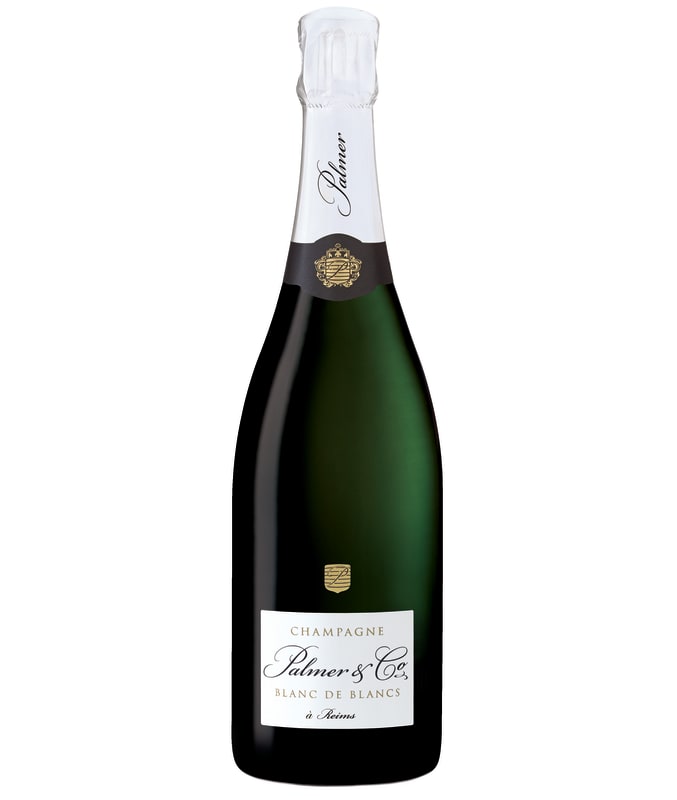


Winemaker Notes
Subtle aromas of citrus, white flowers, and almonds. Silky on the palate with beautiful minerality. An incomparably pure cuvée. 100% Chardonnay.
Crafted from Chardonnay primarily from the magnificent terroirs of Villers-Marmery and Trépail. These Premier Crus in the Montagne de Reims area, recognized for their elegance and freshness, are harmoniously blended with the delicately fruity Chardonnay of the Côte de Sézanne.
Professional Ratings
-
Decanter
Brimming with charm and generosity with lavish apricot tart, roasted citrus and meringue aromatics all shrouded in a super silky mousse and delightfully brisk lemon acidity.
-
Tasting Panel
This finely beaded 100% Chardonnay hails primarily from the Montagne de Reims Premiers Crus of Trépail and Villers-Marmery and sees four- plus years on the lees. Mingling with brioche, nuts, and honeycomb on the nose, glowing golden apple alights with pluot on the satiny, succulent, slightly sea-salty palate, finishing deftly with citrus and chalk.
-
Wilfred Wong of Wine.com
COMMENTARY: The Champagne Palmer & Co. Blanc de Blancs is concentrated yet refined and delicate with a long and lasting finish. TASTING NOTES: This wine shines with aromas and flavors of stones, minerals, and savory spices. Pair it with grilled Dungeness crab and enjoy the feast. (Tasted: September 20, 2022, Napa, CA)
-
James Suckling
Attractive biscuity, yeasty aromas here, with some salty parmesan alongside dried citrus peel. Medium-bodied and full of flavor, with excellent density and focus. Tight bubbles.
-
Wine Enthusiast
This 100% Chardonnay Champagne has a fine tang and an edge of minerality. Its ripe fruits are a balance to the acidity and vivid texture. The wine has a beautifully crisp aftertaste.
-
Wine Spectator
A lively version in an aperitif style, offering a balanced mix of ripe green apple and pear, biscuit, candied ginger and chalky mineral set on a light, lacy bead. Drink now.


A term typically reserved for Champagne and Sparkling Wines, non-vintage or simply “NV” on a label indicates a blend of finished wines from different vintages (years of harvest). To make non-vintage Champagne, typically the current year’s harvest (in other words, the current vintage) forms the base of the blend. Finished wines from previous years, called “vins de reserve” are blended in at approximately 10-50% of the total volume in order to achieve the flavor, complexity, body and acidity for the desired house style. A tiny proportion of Champagnes are made from a single vintage.
There are also some very large production still wines that may not claim one particular vintage. This would be at the discretion of the winemaker’s goals for character of the final wine.

Associated with luxury, celebration, and romance, the region, Champagne, is home to the world’s most prized sparkling wine. In order to bear the label, ‘Champagne’, a sparkling wine must originate from this northeastern region of France—called Champagne—and adhere to strict quality standards. Made up of the three towns Reims, Épernay, and Aÿ, it was here that the traditional method of sparkling wine production was both invented and perfected, birthing a winemaking technique as well as a flavor profile that is now emulated worldwide.
Well-drained, limestone and chalky soil defines much of the region, which lend a mineral component to its wines. Champagne’s cold, continental climate promotes ample acidity in its grapes but weather differences from year to year can create significant variation between vintages. While vintage Champagnes are produced in exceptional years, non-vintage cuvées are produced annually from a blend of several years in order to produce Champagnes that maintain a consistent house style.
With nearly negligible exceptions, . These can be blended together or bottled as individual varietal Champagnes, depending on the final style of wine desired. Chardonnay, the only white variety, contributes freshness, elegance, lively acidity and notes of citrus, orchard fruit and white flowers. Pinot Noir and its relative Pinot Meunier, provide the backbone to many blends, adding structure, body and supple red fruit flavors. Wines with a large proportion of Pinot Meunier will be ready to drink earlier, while Pinot Noir contributes to longevity. Whether it is white or rosé, most Champagne is made from a blend of red and white grapes—and uniquely, rosé is often produce by blending together red and white wine. A Champagne made exclusively from Chardonnay will be labeled as ‘blanc de blancs,’ while ones comprised of only red grapes are called ‘blanc de noirs.’