

Winemaker Notes
Professional Ratings
-
Robert Parker's Wine Advocate
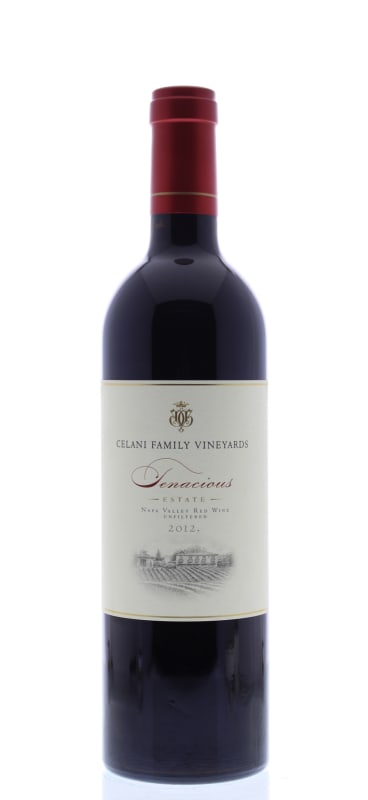
Their biggest production, the 2012 Proprietary Red Blend Tenacious (70% Merlot and 30% Cabernet Franc), is probably my favorite wine, with the exception of the 2013 Cabernet Sauvignon Adore. This is a beauty. Dense, plum/ruby with notes of mulberry, forest floor, fudge, coffee, black cherry and blackcurrant fruit, it is dense, opulent, full-bodied, beautifully made, supple and sexy to drink – very much in keeping with the style of 2012.
-
Wine Spectator
A dense core of lively acidity and well-structured tannins is wrapped in a velvety texture. Red currant aromas are matched with bold flavors of black cherry, mineral and dark chocolate. Merlot and Cabernet Franc. Best from 2017 through 2023.
-
Wilfred Wong of Wine.com
Who are these guys? The 2012 Celani Family Vineyards Tenacious took me by surprise. As I was tasting my daily set of wines, this wine actually made me slow down for a second look. At first, it came across as just another powerful Napa Valley red—tannins and ripe fruit can often blind even the most experienced tasters. When I returned to the wine, I could taste a special synergy between the Merlot and Cabernet Franc. While this is not a Saint-Émilion, this is as fine of an example of a Right Bank Bordeaux as I have tasted from the New World. Celani Family Vineyards is now in my periscope. Just beginning to drink nicely now, this wine will improve greatly with just a little bit of time. (Tasted: July 7, 2016, San Francisco, CA)


Undoubtedly proving its merit over and over, Napa Valley is a now a leading force in the world of prestigious red wine regions. Though Cabernet Sauvignon dominates Napa Valley, other red varieties certainly thrive here. Important but often overlooked include Merlot and other Bordeaux varieties well-regarded on their own as well as for their blending capacities. Very old vine Zinfandel represents an important historical stronghold for the region and Pinot noir is produced in the cooler southern parts, close to the San Pablo Bay.
Perfectly situated running north to south, the valley acts as a corridor, pulling cool, moist air up from the San Pablo Bay in the evenings during the hot days of the growing season, which leads to even and slow grape ripening. Furthermore the valley claims over 100 soil variations including layers of volcanic, gravel, sand and silt—a combination excellent for world-class red wine production.