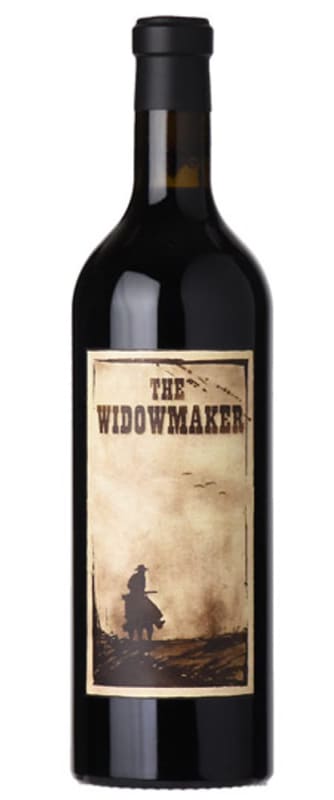


Winemaker Notes
Produced by the En Chamberlin Vineyard. 2000 saw the planting of 10 more stony acres. Grafted on phyloxera resistant rootstock, it's another first for the region.
Professional Ratings
-
Vinous
A burst of cassis and rosemary come together with hints of pipe tobacco, pine resin and crushed blackberries as the 2021 Widowmaker evolves in the glass. This is pure elegance, silken and serene, with ripe black fruits and tactile mineral tones propelled by a core of juicy acidity. Blue and purple inner florals echo over a saturation of currants, licorice and fine tannins.
-
James Suckling
Floral, black licorice and black cherry aromas lead to just-ripe, focused black cherries and blueberries. Aged in 25% to 30% new French demi-muids, the wine is both rich and balanced, mouth-filling yet structured, with moderate tannins and fresh acidity. From biodynamically grown grapes.
-
Wine Enthusiast
Given the hombre on the wine’s label, a worn saddle-leather aroma, with accompanying notes of mulberries, pomegranate seeds and cherry blossoms, feels right at home. Grippy tannins lay down more leather on the full-bodied palate, joined by boysenberry and Irish breakfast tea flavors.
-
Wine Spectator
Rich and detailed, this red offers polished flavors of black cherry and huckleberry accented with toasty cinnamon, espresso and spices as this unfurls toward fine-grained tannins.


A noble variety bestowed with both power and concentration, Cabernet Sauvignon enjoys success all over the globe, its best examples showing potential to age beautifully for decades. Cabernet Sauvignon flourishes in Bordeaux's Medoc where it is often blended with Merlot and smaller amounts of some combination of Cabernet Franc, Malbecand Petit Verdot. In the Napa Valley, ‘Cab’ is responsible for some of the world’s most prestigious, age-worthy and sought-after “cult” wines. Somm Secret—DNA profiling in 1997 revealed that Cabernet Sauvignon was born from a spontaneous crossing of Cabernet Franc and Sauvignon Blanc in 17th century southwest France.

Responsible for some of Washington’s most highly acclaimed wines, the Walla Walla Valley has experienced a surge in popularity in recent years and is home to both historic wineries and younger, up-and-coming producers.
The Walla Walla Valley, a Native American name meaning “many waters,” is located in southeastern Washington; part of the appellation actually extends into Oregon. Soils here are well-drained, sandy loess over Missoula Flood deposits and fractured basalt.
It is a region perfectly suited to Rhône-inspired Syrahs, distinguished by savory notes of red berry, black olive, smoke and fresh earth. Cabernet Sauvignon and Merlot create a range of styles from smooth and supple to robust and well-structured. White varieties are rare but some producers blend Sauvignon Blanc with Sémillon, resulting in a rich and round style, and plantings of Viognier, while minimal, are often quite successful.
Of note within Walla Walla, is one new and very peculiar appellation, called the Rocks District of Milton-Freewater. This is the only AVA in the U.S. whose boundaries are totally defined by the soil type. Soils here look a bit like those in the acclaimed Rhône region of Chateauneuf-du-Pape, but are large, ancient, basalt cobblestones. These stones work in the same way as they do in Chateauneuf, absorbing and then radiating the sun's heat up to enhance the ripening of grape clusters. The Rocks District is within the part of Walla Walla that spills over into Oregon and naturally excels in the production of Rhône varieties like Syrah, as well as the Bordeaux varieties.