

Winemaker Notes
Professional Ratings
-
Robert Parker's Wine Advocate
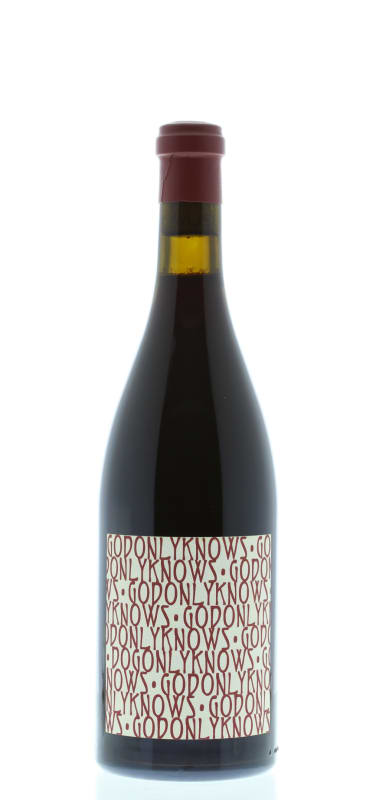
Grenache seemed to handle the heat nicely in 2013 and the 2013 Grenache God Only Knows Armada Vineyard offers a gorgeous, rich, almost masculine style (especially when it’s tasted next to the No Girls Grenache) in its dark fruits, crushed herbs, mineral and leather scented profile. Even showing a touch of game with time in the glass, this beauty has fine tannin, plenty of fruit and a great finish, all suggesting it will drink nicely for another decade.
-
Wine Enthusiast
This wine is perfumed with notes of potpourri, red fruit, funk, crushed gravel, ash, olive, orange peel and peat. The palate explodes with fruit and savory flavors that bring a sense of depth but also a sense of elegance and weightlessness. A hyper-extended savory finish kicks it up a notch.
-
Wine Spectator
Razor-focused but brimming with personality, offering smoky raspberry, black olive and crushed stone notes framed with refined tannins. Drink now through 2023.


Grenache thrives in any warm, Mediterranean climate where ample sunlight allows its clusters to achieve full phenolic ripeness. While Grenache's birthplace is Spain (there called Garnacha), today it is more recognized as the key player in the red blends of the Southern Rhône, namely Châteauneuf-du-Pape, Côtes du Rhône and its villages. Somm Secret—The Italian island of Sardinia produces bold, rustic, single varietal Grenache (there called Cannonau). California, Washington and Australia have achieved found success with Grenache, both flying solo and in blends.

Responsible for some of Washington’s most highly acclaimed wines, the Walla Walla Valley has experienced a surge in popularity in recent years and is home to both historic wineries and younger, up-and-coming producers.
The Walla Walla Valley, a Native American name meaning “many waters,” is located in southeastern Washington; part of the appellation actually extends into Oregon. Soils here are well-drained, sandy loess over Missoula Flood deposits and fractured basalt.
It is a region perfectly suited to Rhône-inspired Syrahs, distinguished by savory notes of red berry, black olive, smoke and fresh earth. Cabernet Sauvignon and Merlot create a range of styles from smooth and supple to robust and well-structured. White varieties are rare but some producers blend Sauvignon Blanc with Sémillon, resulting in a rich and round style, and plantings of Viognier, while minimal, are often quite successful.
Of note within Walla Walla, is one new and very peculiar appellation, called the Rocks District of Milton-Freewater. This is the only AVA in the U.S. whose boundaries are totally defined by the soil type. Soils here look a bit like those in the acclaimed Rhône region of Chateauneuf-du-Pape, but are large, ancient, basalt cobblestones. These stones work in the same way as they do in Chateauneuf, absorbing and then radiating the sun's heat up to enhance the ripening of grape clusters. The Rocks District is within the part of Walla Walla that spills over into Oregon and naturally excels in the production of Rhône varieties like Syrah, as well as the Bordeaux varieties.