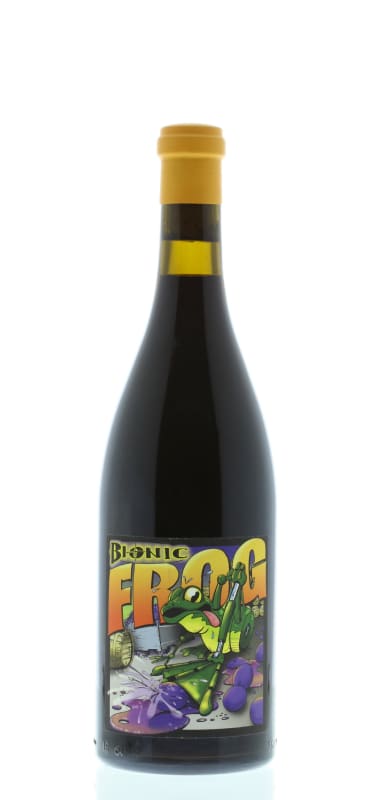


Winemaker Notes
Professional Ratings
-
Robert Parker's Wine Advocate
Always one of the most unique in the lineup, the 2014 Syrah Bionic Frog is phenomenal stuff any way you look at it. Cold fireplace, charred meat, tapenade, shiitake and loads of dark, earthy fruit all emerge from this full-bodied, tight, backward and beautifully concentrated Syrah that readers just need to taste. Incredibly long, elegant, building and heavenly juicy, don't miss a chance to get some of this! It needs 3-5 years of cellaring and is going to blow you away over the following two decades.
-
James Suckling
Deep fruit presence from the outset. Dark plums and purple cherries with abundant slate and graphite, dark chocolate and orange zest. The palate has impressive power and detail, superb purity and clarity. The palate glides effortlessly. A sexy finish. Drink or hold.
-
Wine Enthusiast
Aromatically brooding notes of herb, mineral, black olive tapenade, stem, flower, soot and plum lead to vibrant, concentrated fruit and umami flavors. It's an intense wine that brings a great sense of tension, along with abundant minerality. Give it time to open up.
-
Wine Spectator
Plush and expressive, with a core of great structure, offering blackberry, licorice and smoky meat notes that glide through a rich, layered finish. Drink now through 2024.


Marked by an unmistakable deep purple hue and savory aromatics, Syrah makes an intense, powerful and often age-worthy red. Native to the Northern Rhône, Syrah achieves its maximum potential in the steep village of Hermitage and plays an important component in the Red Rhône Blends of the south, adding color and structure to Grenache and Mourvèdre. Syrah is the most widely planted grape of Australia and is important in California and Washington. Sommelier Secret—Such a synergy these three create together, the Grenache, Syrah, Mourvedre trio often takes on the shorthand term, “GSM.”

Responsible for some of Washington’s most highly acclaimed wines, the Walla Walla Valley has experienced a surge in popularity in recent years and is home to both historic wineries and younger, up-and-coming producers.
The Walla Walla Valley, a Native American name meaning “many waters,” is located in southeastern Washington; part of the appellation actually extends into Oregon. Soils here are well-drained, sandy loess over Missoula Flood deposits and fractured basalt.
It is a region perfectly suited to Rhône-inspired Syrahs, distinguished by savory notes of red berry, black olive, smoke and fresh earth. Cabernet Sauvignon and Merlot create a range of styles from smooth and supple to robust and well-structured. White varieties are rare but some producers blend Sauvignon Blanc with Sémillon, resulting in a rich and round style, and plantings of Viognier, while minimal, are often quite successful.
Of note within Walla Walla, is one new and very peculiar appellation, called the Rocks District of Milton-Freewater. This is the only AVA in the U.S. whose boundaries are totally defined by the soil type. Soils here look a bit like those in the acclaimed Rhône region of Chateauneuf-du-Pape, but are large, ancient, basalt cobblestones. These stones work in the same way as they do in Chateauneuf, absorbing and then radiating the sun's heat up to enhance the ripening of grape clusters. The Rocks District is within the part of Walla Walla that spills over into Oregon and naturally excels in the production of Rhône varieties like Syrah, as well as the Bordeaux varieties.