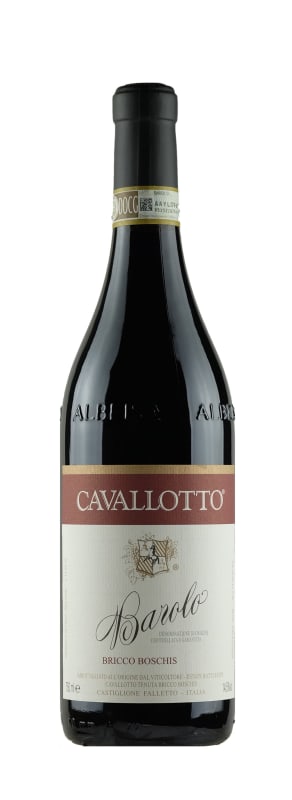


Winemaker Notes
The 2015 Barolo Bricco Boschis leaps from the glass with a heady perfume of red and black fruits, accentuated by notes of tobacco, licorice and crushed rose petals. The warm midsummer gave rise to a depth of fruit that is expansive and generous but not cloying. The initial ripe fruit is supported by layers of spice, tar and mineral motes that give the wine structure and length. Though young, this is a relatively approachable Barolo which will improve in the bottle over the next decade.
This wine finds its best matches at the table, with first courses of prosciutto, salami, Alba beef tartare and vitello tonnato. The wine is best with second courses of red meat in general, but also grilled fish or white meats, or with hard and aged cheeses. Desserts with dark chocolate are also a good match, or it can be enjoyed as a “vino da meditazione” (a wine for meditation) by itself.
Professional Ratings
-
Jeb Dunnuck
A rich ruby into garnet hue, the 2015 Barolo Bricco Boschis offers layers of spice with rosemary, leather, cedar, and black cherry. Full-bodied and ripe, with rounded fruit that floods the palate with black raspberry, balsamic, and fresh earth, it is brooding and warming but remains pure and shows no signs of slowing down.
-
Robert Parker's Wine Advocate
I had tasted this wine from barrel last year, and the wine was already shaping up beautifully back then. Staying the course, the 2015 Barolo Bricco Boschis shows extreme elegance and finesse. These are the characteristics of what is surely one of the most beautiful vineyard sites in Barolo. The Bricco Boschis cru affords a panoramic view onto much of the Langhe, with snowcapped Alps in the background. Barolo from Castiglione Falletto tends to show characteristics that are very fine, precise and linear. That's fundamentally what you get here despite the more exuberant and fleshy 2015 vintage. This wine is truly beautiful.
-
Wine Enthusiast
Aromas of leather, forest floor, mature black-skinned berry, graphite and pipe tobacco form the nose on this classic expression of Barolo. On the structured, delicious palate, taut, polished tannins support juicy Marasca cherry, crushed raspberry, licorice and menthol, while fresh acidity keeps it balanced. It closes on a note of brown spice. Best 2020–2030.
-
Wine Spectator
Mint, eucalyptus, cherry, plum and licorice notes mark this savory style of Barolo. Dense tannins pave the way for a long finish that echoes the cherry flavors and adds mineral and tobacco elements. Still a little rigid on the finish, yet shows fine balance overall. Best from 2023 through 2040.


Responsible for some of the most elegant and age-worthy wines in the world, Nebbiolo, named for the ubiquitous autumnal fog (called nebbia in Italian), is the star variety of northern Italy’s Piedmont region. Grown throughout the area, as well as in the neighboring Valle d’Aosta and Valtellina, it reaches its highest potential in the Piedmontese villages of Barolo, Barbaresco and Roero. Outside of Italy, growers are still very much in the experimentation stage but some success has been achieved in parts of California. Somm Secret—If you’re new to Nebbiolo, start with a charming, wallet-friendly, early-drinking Langhe Nebbiolo or Nebbiolo d'Alba.

The center of the production of the world’s most exclusive and age-worthy red wines made from Nebbiolo, the Barolo wine region includes five core townships: La Morra, Monforte d’Alba, Serralunga d’Alba, Castiglione Falletto and the Barolo village itself, as well as a few outlying villages. The landscape of Barolo, characterized by prominent and castle-topped hills, is full of history and romance centered on the Nebbiolo grape. Its wines, with the signature “tar and roses” aromas, have a deceptively light garnet color but full presence on the palate and plenty of tannins and acidity. In a well-made Barolo wine, one can expect to find complexity and good evolution with notes of, for example, strawberry, cherry, plum, leather, truffle, anise, fresh and dried herbs, tobacco and violets.
There are two predominant soil types here, which distinguish Barolo from the lesser surrounding areas. Compact and fertile Tortonian sandy marls define the vineyards farthest west and at higher elevations. Typically the Barolo wines coming from this side, from La Morra and Barolo, can be approachable relatively early on in their evolution and represent the “feminine” side of Barolo, often closer in style to Barbaresco with elegant perfume and fresh fruit.
On the eastern side of the Barolo wine region, Helvetian soils of compressed sandstone and chalks are less fertile, producing wines with intense body, power and structured tannins. This more “masculine” style comes from Monforte d’Alba and Serralunga d’Alba. The township of Castiglione Falletto covers a spine with both soil types.
The best Barolo wines need 10-15 years before they are ready to drink, and can further age for several decades.