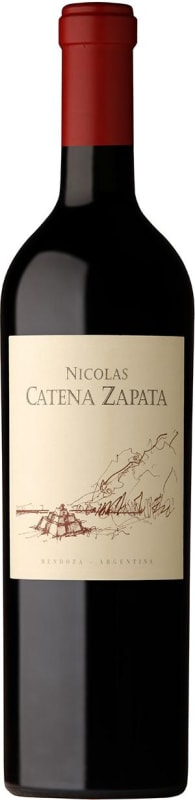


Winemaker Notes
Nicolás Catena Zapata has an intense, deep purple color with bluish-black tones. On the nose, aromas of black fruits – blackberries, black cherries, black plums – predominate with subtle notes of vanilla and dark chocolate intermingled with savory hints of green olive and a stony minerality. On the palate, the wine is tremendously complex, unfolding layer upon layer of red currant, eucalyptus, and black pepper flavors. Black cherries and blackberries give way to cassis followed by a hint of saline minerality. The wine is remarkably concentrated with a firm tannic structure providing the backbone for the lush fruit. The finish is long, a foretoken of the long aging potential of this Argentine masterpiece.
Let the Nicolás Catena Zapata open in a decanter while you grill a Bone-in Ribeye Steak to perfection. Pour yourself a glass. Bliss.
Blend: 65% Cabernet Sauvignon, 35% Malbec
Professional Ratings
-
Jeb Dunnuck
The 2019 Nicolas Catena Zapata is a classic from one of Mendoza’s best vintages in recent years, a blend of 42% Cabernet Sauvignon, 30% Malbec, and 28% Cabernet Franc. Only two vineyards went into the wine, Adrianna and Nicasia, grand cru-level sites that gorgeously accentuate its finer, more elegant leanings. Time in French oak, first and second use, was 18 months, with another 18 months spent in bottle. The lovely, medium-bodied layers of sage and smoky dark chocolate play along chalky tannins with undeniable minerality and a tactile energy that’s hard to resist.
-
James Suckling
This has a complex nose of baked blackberries, grilled plums, dried earth, moss, pine cones, sandalwood, charcoal and cloves. It’s medium-bodied with firm, tightly knit tannins. Wow. So much going on. Layered, seamless and silky. Incredible length. Keeps going. 42% cabernet sauvignon, 30% malbec and 28% cabernet franc.
-
Decanter
Deep, concentrated, bramble and blackcurrant fruit cut through by a racy breeziness of Christmas spices, forest floor and fresh herbs. So youthful, dense and luxurious with an impressive intensity and racy acidity, though at the moment the sweet vanilla oak is quite overt. Imposing tannins, lingering perfume and mouthwatering juiciness, this will age superbly.
-
Robert Parker's Wine Advocate
The 2019 Nicolás Catena Zapata was produced with 42% Cabernet Sauvignon from Gualtallary (Adrianna Vineyard), 30% Malbec from Altamira (Nicasia Vineyard) and a high percentage of Cabernet Franc (28%), also from Adrianna, which took the place of Cabernet Sauvignon. It fermented in small oak barrels, concrete and stainless steel tanks with a short post-fermentative maceration. Élevage was in first and second-use French oak barrels and lasted for 18 months, including malolactic. This is always quite classical in style, with some spiciness from the barrels and hints of smoke and toast, still very young and undeveloped. It has the traditional Bordeaux-blend character and is herbal, floral and spicy, with a beautiful texture, very nice balance and very fine, chalky tannins. 2019 was a very dry year, and the berries were small, very healthy and delivered powerful wines.





Bodega Catena Zapata is one of Argentina's high-altitude Malbec pioneers. The Catena family began making wine in Mendoza in 1902. Nicolas Catena, third generation family vintner, was one of the first to see the potential of Mendoza's mountain vineyards for producing high quality Malbec. In 1994, he became the first Argentine to export a world-class bottling of Malbec under the Catena label. Nicolas is joined by his daughter, Dr. Laura Catena, in their relentless pursuit of world-class quality from the family's high-altitude vineyards. Laura has done extensive work in introducing Malbec and other varietal plant selections, soil and climate analysis, and sustainable practices throughout Mendoza. Head winemaker, Alejandro Vigil, has been at Catena Zapata since 2002 and works with Laura and Nicolas to make wines that express the family's vineyards and palate.

One of the world’s most classic and popular styles of red wine, Bordeaux-inspired blends have spread from their homeland in France to nearly every corner of the New World. Typically based on either Cabernet Sauvignon or Merlot and supported by Cabernet Franc, Malbec and Petit Verdot, the best of these are densely hued, fragrant, full of fruit and boast a structure that begs for cellar time. Somm Secret—Blends from Bordeaux are generally earthier compared to those from the New World, which tend to be fruit-dominant.

By far the largest and best-known winemaking province in Argentina, Mendoza is responsible for over 70% of the country’s enological output. Set in the eastern foothills of the Andes Mountains, the climate is dry and continental, presenting relatively few challenges for viticulturists during the growing season. Mendoza, divided into several distinctive sub-regions, including Luján de Cuyo and the Uco Valley, is the source of some of the country’s finest wines.
For many wine lovers, Mendoza is practically synonymous with Malbec. Originally a Bordelaise variety brought to Argentina by the French in the mid-1800s, here it found success and renown that it never knew in its homeland where a finicky climate gives mixed results. Cabernet Sauvignon, Syrah, Merlot and Pinot Noir are all widely planted here as well (and sometimes even blended with each other or Malbec). Mendoza's main white varieties include Chardonnay, Torrontés, Sauvignon Blanc and Sémillon.