
Winemaker Notes
Professional Ratings
-
Robert Parker's Wine Advocate
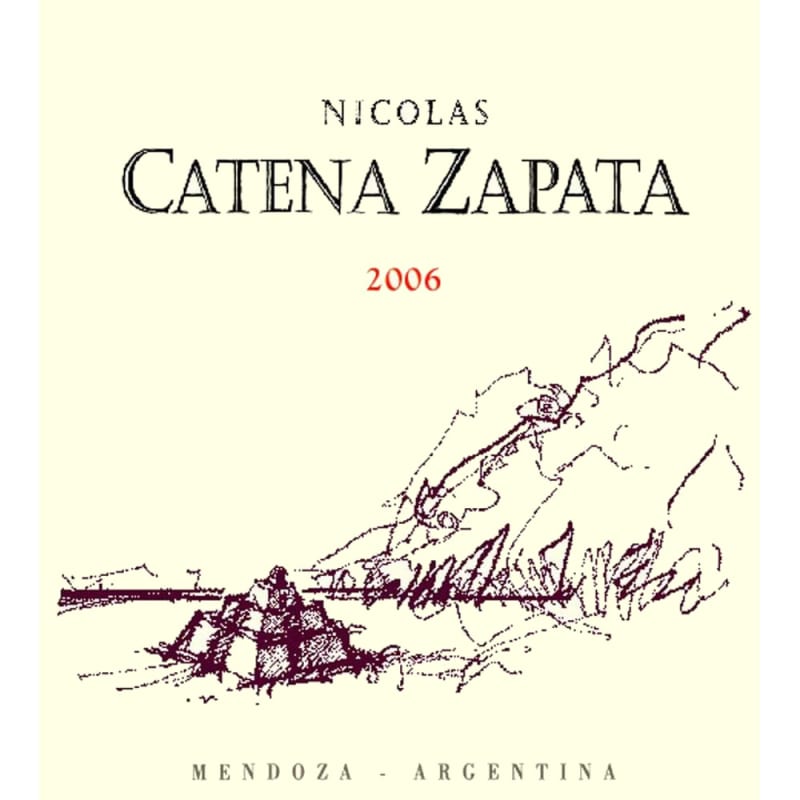
The 2006 Nicolas Catena Zapata is composed of 70% Cabernet Sauvignon and 30% Malbec and spent 26 months in new French oak. It displays a superb perfume of pain grille, spice box, truffle, wild flowers, black cherry, and black currant. Rich, layered, dense, and complex, it, too, combines elegance and power. The wine is structured for the long haul and should easily see its 25th birthday, with 50 not out of the question. There is no track record, and I won’t be around to find out.
-
Wine Enthusiast
Fruity, floral and calm on the nose, with nothing aggresive or out of place. The palate is deep, flush and offers great mouthfeel. while the flavors run toward big, juicy berry, cassis and chocolate. Like most Catena high-enders, this Cabernet-Malbec blend features a toasty finish of coffee and mocha, and overall it's stylish and impressive. Drink now through 2014.
-
Wine Spectator
This is very big, but has a pure core of raspberry and plum fruit that courses along well-integrated structure. Loads of spice, black licorice and graphite notes extend through the finish, which shows some elegance to go with its depth. Impressive.





Bodega Catena Zapata is one of Argentina's high-altitude Malbec pioneers. The Catena family began making wine in Mendoza in 1902. Nicolas Catena, third generation family vintner, was one of the first to see the potential of Mendoza's mountain vineyards for producing high quality Malbec. In 1994, he became the first Argentine to export a world-class bottling of Malbec under the Catena label. Nicolas is joined by his daughter, Dr. Laura Catena, in their relentless pursuit of world-class quality from the family's high-altitude vineyards. Laura has done extensive work in introducing Malbec and other varietal plant selections, soil and climate analysis, and sustainable practices throughout Mendoza. Head winemaker, Alejandro Vigil, has been at Catena Zapata since 2002 and works with Laura and Nicolas to make wines that express the family's vineyards and palate.

One of the world’s most classic and popular styles of red wine, Bordeaux-inspired blends have spread from their homeland in France to nearly every corner of the New World. Typically based on either Cabernet Sauvignon or Merlot and supported by Cabernet Franc, Malbec and Petit Verdot, the best of these are densely hued, fragrant, full of fruit and boast a structure that begs for cellar time. Somm Secret—Blends from Bordeaux are generally earthier compared to those from the New World, which tend to be fruit-dominant.

With vineyards tretching along the eastern side of the Andes Mountains from Patagonia in the south to Salta in the north, Argentina is one of the world’s largest and most dynamic wine producing countries—and most important in South America.
Since the late 20th century vineyard investments, improved winery technology and a commitment to innovation have all contributed to the country’s burgeoning image as a producer of great wines at all price points. The climate here is diverse but generally continental and agreeable, with hot, dry summers and cold snowy winters—a positive, as snow melt from the Andes Mountains is used heavily to irrigate vineyards. Grapes very rarely have any difficulty achieving full ripeness.
Argentina’s famous Mendoza region, responsible for more than 70% of Argentina’s wine production, is further divided into several sub-regions, with Luján de Cuyo and the Uco Valley most noteworthy. Red wines dominate here, especially Malbec, the country’s star variety, while Chardonnay is the most successful white.
The province of San Juan is best known for blends of Bonarda and Syrah. Torrontés is a specialty of the La Rioja and Salta regions, the latter of which is also responsible for excellent Malbecs grown at very high elevation.