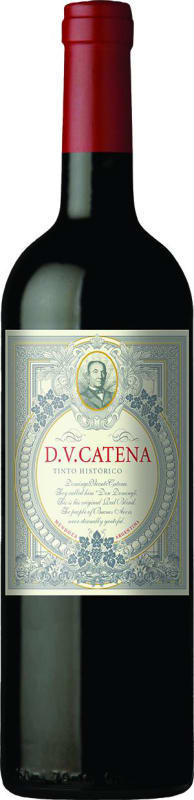


Winemaker Notes
Aromas of black fruit, flowers, and spice with a rich mouthfeel and wonderful finish. Malbec lends freshness and smoothness, while Petit Verdot gives volume and length.
Blend: 79% Malbec, 15% Bonarda, 6% Petit Verdot
Professional Ratings
-
James Suckling
A juicy, vibrant and fruity blend of malbec, bonarda and petit verdot. Aromas of red cherries, berries and touches of citrus and potpourri. Fresh and brambly, with a medium body and small-grained fruit tannins.
-
Vinous
The 2023 Tinto Histórico DV Catena blends 79% Malbec, 15% Bonarda and 6% Petit Verdot from four vineyards across Uco Valley and Primera Zona. Aged for up to 13 months in barrel, its appealing aromatic profile offers orange petit four, white pepper and balsamic notes over black fruit and oak. Slightly indulgent with volume and grip, the palate derives plushness from its aging and subtly active tannins from the vintage.
-
Robert Parker's Wine Advocate
Composed of 79% Malbec, 15% Bonarda and 6% Petit Verdot, the 2023 DV Catena Tinto Histórico pays tribute to Domingo Vicente Catena's red blends of the 1930s. It is quite pretty and refined on the nose, bringing together red fruit, licorice and dried-spice aromas that introduce a lush, texturally satisfying palate before concluding with a solid, lively finish.





Bodega Catena Zapata is one of Argentina's high-altitude Malbec pioneers. The Catena family began making wine in Mendoza in 1902. Nicolas Catena, third generation family vintner, was one of the first to see the potential of Mendoza's mountain vineyards for producing high quality Malbec. In 1994, he became the first Argentine to export a world-class bottling of Malbec under the Catena label. Nicolas is joined by his daughter, Dr. Laura Catena, in their relentless pursuit of world-class quality from the family's high-altitude vineyards. Laura has done extensive work in introducing Malbec and other varietal plant selections, soil and climate analysis, and sustainable practices throughout Mendoza. Head winemaker, Alejandro Vigil, has been at Catena Zapata since 2002 and works with Laura and Nicolas to make wines that express the family's vineyards and palate.

One of the world’s most classic and popular styles of red wine, Bordeaux-inspired blends have spread from their homeland in France to nearly every corner of the New World. Typically based on either Cabernet Sauvignon or Merlot and supported by Cabernet Franc, Malbec and Petit Verdot, the best of these are densely hued, fragrant, full of fruit and boast a structure that begs for cellar time. Somm Secret—Blends from Bordeaux are generally earthier compared to those from the New World, which tend to be fruit-dominant.

By far the largest and best-known winemaking province in Argentina, Mendoza is responsible for over 70% of the country’s enological output. Set in the eastern foothills of the Andes Mountains, the climate is dry and continental, presenting relatively few challenges for viticulturists during the growing season. Mendoza, divided into several distinctive sub-regions, including Luján de Cuyo and the Uco Valley, is the source of some of the country’s finest wines.
For many wine lovers, Mendoza is practically synonymous with Malbec. Originally a Bordelaise variety brought to Argentina by the French in the mid-1800s, here it found success and renown that it never knew in its homeland where a finicky climate gives mixed results. Cabernet Sauvignon, Syrah, Merlot and Pinot Noir are all widely planted here as well (and sometimes even blended with each other or Malbec). Mendoza's main white varieties include Chardonnay, Torrontés, Sauvignon Blanc and Sémillon.