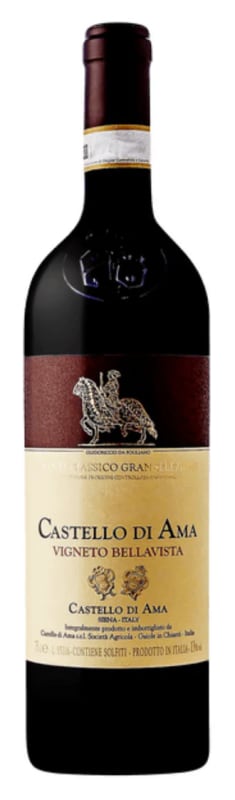


Winemaker Notes
Intense red ruby color. Potent aromas of spices and blackberries. The palate is juicy and succulent with a silky texture, complexed and nuanced. Built for cellaring.
Professional Ratings
-
Vinous
The 2021 Chianti Classico Gran Selezione Vigneto Bellavista is a stunner. Dense, powerful and forbidding, in classic Bellavista style, the 2021 packs an immense punch. It is also a very potent wine. All of the Bellavista signatures are present, but they are nearly buried by the sheer intensity of the fruit. Graphite, sage, crushed rocks, lavender, mint and dried herbs all play off a core of cool, dark-toned fruit. The 2021 is a bruiser—a beautiful, vivid bruiser. I can't wait to see how it ages.
-
Decanter
During a tasting with Castello di Ama’s Arturo Pallanti, he described Bellavista's essence as complexity before elegance. Indeed, 2021 is an intricate and detailed tapestry of all its elements. It speaks deftly of cool heights, luminous exposures and an exceptionally warm vintage, yet is youthfully restrained rather than effusive. Traces of blood orange, blood, smoke and stone weave through dark berries. The palate is agile in its brawn and density, with definition to its blackcurrant and dark plum richness. Tactile tannins are tightly cinched. A magnificent follow up to the stunning 2020.
-
Robert Parker's Wine Advocate
The Castello di Ama 2021 Chianti Classico Gran Selezione Vigneto Bellavista shows dark color saturation and elegantly restrained aromas of dark cherry and blackberry. The Vigneto Bellavista is one of the Gran Cru sites in this appellation, with vines planted over the tall ridge of a sun-drenched hillside. That special positioning always gives this wine more concentration and complexity, ultimately. There is sweet fruit, ripe plum and spice, and these aromas are framed by a dark slate-like mineral note. The mouthfeel is compact and firm with a beautiful sense of lasting richness.
-
Wine Spectator
Concentrated and bursting with dark fruit flavors of blackberry, black cherry and black currant, this version is silky yet underlined with a layer of beefy tannins. Combines purity and intensity, with terrific harmony and a superlong, mineral-infused finish. The length reveals this reds pedigree and potential. Sangiovese and Malvasia Nera. Best from 2028 through 2050. 466 cases made, 50 cases imported.


Disenchanted with Italian winemaking laws in the 1970s, a few rebellious Tuscan winemakers decided to get creative. Instead of following tradition, to bottle Sangiovese by itself, they started blending it with international varieties, namely Cabernet Sauvignon, Merlot and Syrah in differing proportions and with amazing success. However, some Tuscan Blends don’t even include Sangiovese. Somm Secret—The suffix –aia in Italian modifies a word in much the same way –y acts in English. For example, a place with many stones (sassi) becomes Sassicaia. While not all Super Tuscan producer names end in –aia, they all share a certain coy nomenclature.

One of the first wine regions anywhere to be officially recognized and delimited, Chianti Classico is today what was originally defined simply as Chianti. Already identified by the early 18th century as a superior zone, the official name of Chianti was proclaimed upon the area surrounding the townships of Castellina, Radda and Gaiole, just north of Siena, by Cosimo III, Grand Duke of Tuscany in an official decree in 1716.
However, by the 1930s the Italian government had appended this historic zone with additonal land in order to capitalize on the Chianti name. It wasn’t until 1996 that Chianti Classico became autonomous once again when the government granted a separate DOCG (Denominazione di Origine Controllata e Garantita) to its borders. Ever since, Chianti Classico considers itself no longer a subzone of Chianti.
Many Classicos are today made of 100% Sangiovese but can include up to 20% of other approved varieties grown within the Classico borders. The best Classicos will have a bright acidity, supple tannins and be full-bodied with plenty of ripe fruit (plums, black cherry, blackberry). Also common among the best Classicos are expressive notes of cedar, dried herbs, fennel, balsamic or tobacco.