

Winemaker Notes
Professional Ratings
-
Robert Parker's Wine Advocate
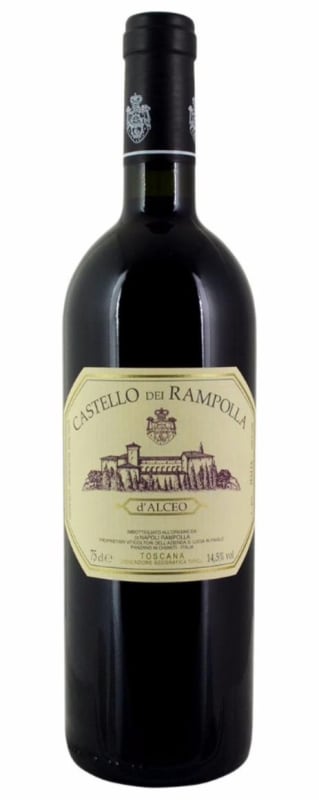
It's not easy to wrap your head around the Castello dei Rampolla 2017 d'Alceo. The wine is exaggerated on almost every front, including its powerful tannins, shaped by a scorching hot and dry vintage that produced super concentrated fruit. I can't say that this vintage is my style or that it delivers the extreme elegance and finesse that this estate at the heart of Panzano, one of the greatest growing sites in Italy, is capable of. However, there is a lot to be said about this blend of mostly Cabernet Sauvignon with Petit Verdot. The wine opens to an almost impenetrable appearance with inky black hues and unruly intensity. The power of the bouquet is driven by the ripeness of the fruit and perhaps a positive pinch of volatile acidity (just the right amount for emphasis) that adds extra lift and punch to the overall effect. Syrupy blackberry segues to smoky tar and resin. We saw impactful tannins in the 2016 Sammarco, but the 2017 d'Alceo takes that astringency one step further. The 2017 will sure take many years to reach harmony, although I suspect that the tannic imprint is here to stay.


Legendary in Italy for its Renaissance art and striking landscape, Tuscany is also home to many of the country’s best red wines. Sangiovese reigns supreme here, as either the single varietal, or a dominant player, in almost all of Tuscany’s best.
A remarkable Chianti, named for its region of origin, will have a bright acidity, supple tannins and plenty of cherry fruit character. From the hills and valleys surrounding the medieval village of Montalcino, come the distinguished and age-worthy wines based on Brunello (Sangiovese). Earning global acclaim since the 1970s, the Tuscan Blends are composed solely of international grape varieties or a mix of international and Sangiovese. The wine called Vine Nobile di Montepulciano, composed of Prognolo Gentile (Sangiovese) and is recognized both for finesse and power.