
Winemaker Notes
Professional Ratings
-
Robert Parker's Wine Advocate
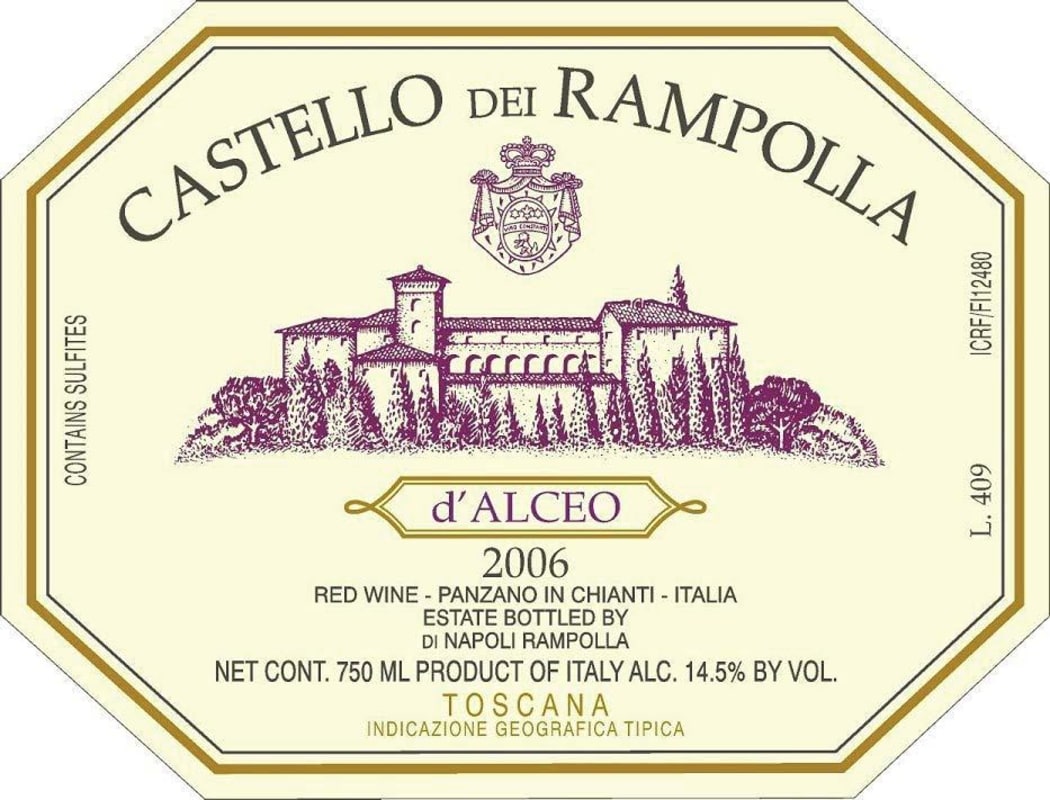
This is the standout wine of this vertical tasting. The Castello dei Rampolla 2006 d'Alceo remains incredibly vibrant in terms of mouthfeel, with a pretty vein of acidity that cuts across the mid-palate. The tannins are chalky, and that freshness is simply gorgeous. On the bouquet, you get earthy notes, dark fruit and wild plum. I came back to the wine later in my tasting, and although it maintained its distinctive freshness, spicy notes of barbecue smoke began to appear. In terms of farming, this estate is focused on soil health and uses cover crops (sometimes rolled between the rows) to add organic matter and create a moisture barrier. They have been following these vineyard practices for the past four years and are very happy with the results.


Legendary in Italy for its Renaissance art and striking landscape, Tuscany is also home to many of the country’s best red wines. Sangiovese reigns supreme here, as either the single varietal, or a dominant player, in almost all of Tuscany’s best.
A remarkable Chianti, named for its region of origin, will have a bright acidity, supple tannins and plenty of cherry fruit character. From the hills and valleys surrounding the medieval village of Montalcino, come the distinguished and age-worthy wines based on Brunello (Sangiovese). Earning global acclaim since the 1970s, the Tuscan Blends are composed solely of international grape varieties or a mix of international and Sangiovese. The wine called Vine Nobile di Montepulciano, composed of Prognolo Gentile (Sangiovese) and is recognized both for finesse and power.