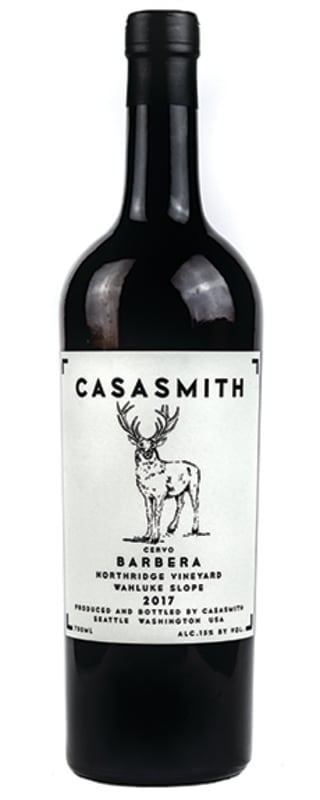


Winemaker Notes
Fresh, round and subtle. Raspberry, stone, tobacco and a true sense of place are my first thoughts. Expansive palate with ever-expanding complexities. Fill a glass and let the secrets unfold.
Professional Ratings
-
Jeb Dunnuck
One of the best expressions of this variety outside of Italy must be the 2017 Barbera Cervo from Charles Smith. Its vibrant purple/ruby color is followed by a fresh, complex bouquet of blue and black fruits, leafy herbs, vanilla, and spice. It’s terrific on the palate as well, offering medium to full body, tons of fruit, and remarkable purity.
-
James Suckling
Attractive wild raspberries abound here with a fresh and direct impression, delivered as a refreshingly zesty style on the palate. Energetic finish.


Friendly and approachable, Barbera produces wines in a wide range of styles, from youthful, fresh and fruity to serious, structured and age-worthy. Piedmont is the most famous source of Barbera; those from Asti and Alba garner the most praise. Barbera actually can adapt to many climates and enjoys success in some New World regions. Somm Secret—In the past it wasn’t common or even accepted to age Barbera in oak but today both styles—oaked and unoaked—abound and in fact most Piedmontese producers today produce both styles.

An important winegrowing state increasingly recognized for its high-quality reds and whites, Washington ranks second in production in the U.S. after California. Washington wines continue to gain well-deserved popularity as they garner higher and higher praise from critics and consumers alike.
Washington winemakers draw inspiration mainly from Napa Valley, Bordeaux and the Rhône as well as increasingly from other regions like Spain and Italy. Most viticulture takes place on the eastern side of the state—an arid desert in the rain shadow of the Cascade mountains. Irrigation is made possible by the Columbia River. Temperatures are extreme, with hot and dry summers and cold winters, during which frost can be a risk.
Washington’s wine industry was initially built on Merlot, which remains an important variety to this day, despite having been overtaken in acreage planted by Cabernet Sauvignon and Syrah. Bordeaux blends and Rhône blends are common as well as single varietal bottlings. Washington reds tend to express a real purity of concentrated fruit. The best examples have a bold richness, seamless texture, plush or powdery tannins and flavors such as licorice, herb, forest floor, espresso and dark chocolate.
In terms of white wine from Washington state, Riesling is the state’s major success story, producing crisp, aromatic examples with plenty of stone fruit that range from bone dry to lusciously sweet. Chardonnay and Sauvignon Blanc perform nicely here as well, and Viognier is beginning to pick up steam.