
Winemaker Notes
Professional Ratings
-
Decanter
Youthful, uplifting and expressive, with a beautifully spicy nose of blackberry and cassis leading to a polished, svelte yet wonderfully concentrated palate underpinned by a zesty freshness.
-
Robert Parker's Wine Advocate
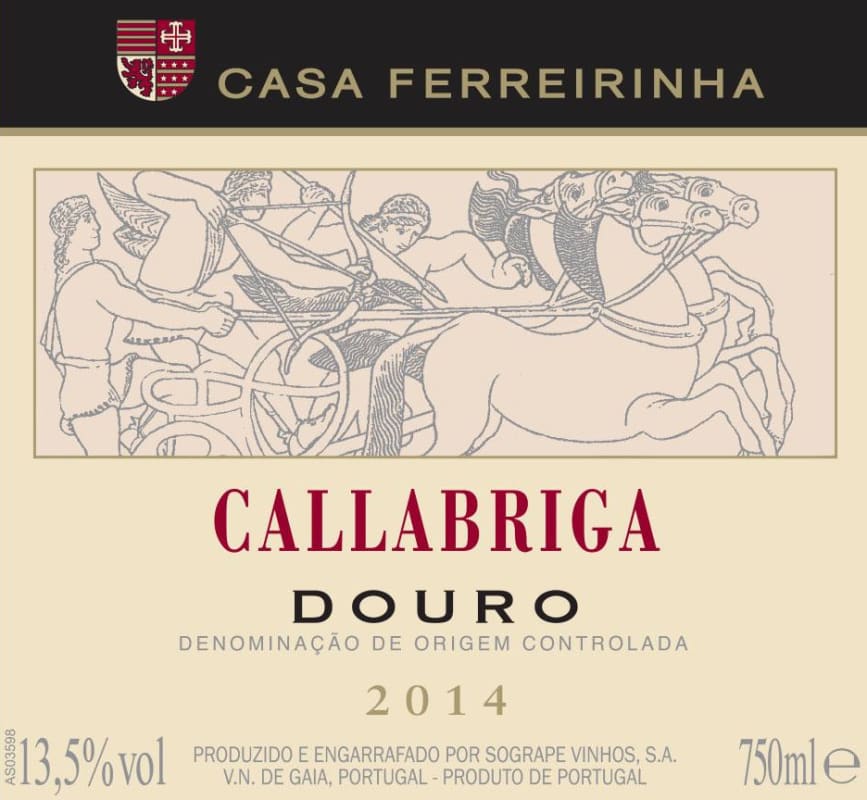
The 2014 Callabriga from Ferreirinha has been seen before, but this is worth a checkup. All sourced from Douro Superior, it is a blend of 70% Touriga Franca, 20% Touriga Nacional and 10% Tinta Roriz that comes in at 13.5% alcohol. It was aged in a mixture of used French (75%) and American (25%) oak for 12 to 18 months, depending on lot. Its structure is impressive and its depth reasonable in a tough year. The fruit remains dry and stern, though, lacking vivid flavor. Even so, it shows well and slowly opens a bit. This is nowhere near fully ready to drink, but you can approach it if you give it some air. It is a pretty serious red in a difficult year. The prices were not yet set. Prior estimates indicated that it would probably would be in the mid-$30 range. There were 113,000 bottles produced.


Notoriously food-friendly, long-lasting and Spain’s most widely planted grape, Tempranillo is the star variety of red wines from Rioja and Ribera del Duero. The Rioja terms Joven, Crianza, Reserva and Gran Reserva indicate both barrel and bottle time before release. Traditionally blended in Rioja with Garnacha, plus a bit of Mazuelo (Carignan) and Graciano, the Tempranillo in Ribera del Duero typically stands alone. Somm Secret—Tempranillo claims many different names depending on location. In Penedès, it is called Ull de Llebre and in Valdepeñas, goes by Cencibel. Known as Tinta Roriz in Portugal, Tempranillo plays an important role in Port wine.

The home of Port—perhaps the most internationally acclaimed beverage—the Douro region of Portugal is one of the world’s oldest delimited wine regions, established in 1756. The vineyards of the Douro, set on the slopes surrounding the Douro River (known as the Duero in Spain), are incredibly steep, necessitating the use of terracing and thus, manual vineyard management as well as harvesting. The Douro's best sites, rare outcroppings of Cambrian schist, are reserved for vineyards that yield high quality Port.
While more than 100 indigenous varieties are approved for wine production in the Douro, there are five primary grapes that make up most Port and the region's excellent, though less known, red table wines. Touriga Nacional is the finest of these, prized for its deep color, tannins and floral aromatics. Tinta Roriz (Spain's Tempranillo) adds bright acidity and red fruit flavors. Touriga Franca shows great persistence of fruit and Tinta Barroca helps round out the blend with its supple texture. Tinta Cão, a fine but low-yielding variety, is now rarely planted but still highly valued for its ability to produce excellent, complex wines.
White wines, generally crisp, mineral-driven blends of Arinto, Viosinho, Gouveio, Malvasia Fina and an assortment of other rare but local varieties, are produced in small quantities but worth noting.
With hot summers and cool, wet winters, the Duoro has a maritime climate.