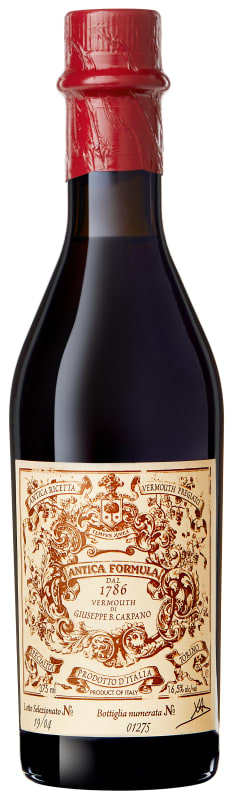


Winemaker Notes
The nose has a strong bouquet of vanilla with spice, citrus and subtle notes of almonds, raisins and cloves. The palate is well rounded with a rich vanilla taste. The finish has bitter orange and date notes with a subtle hint of cocoa beans and saffron.
Antica Formula can be enjoyed neat, on the rocks, or in a spritz. It also serves as the perfect ingredient for cocktails like the Manhattan and the Negroni, making it a staple for any home bar.
Professional Ratings
-
Wine Enthusiast
This dark, mysterious vermouth is rich, complex and layered, boasting aromas of mint and other herbs, plums and figs, reminscent of Madeira. The rich flavors are hard to pin down: cocoa, red wine, almonds, bitter marmelade, hints of spice and toffee all play across the palate, finishing with a bracing bitter edge. This delectable sweet vermouth would shine in a Manhattan.


For this look at Italian dessert wine, we will omit sweet sparkling options like Moscato d’Asti and Asti Spumante, which are covered in our discussion of Italian sparkling wine. We will also pass on sweet Vermouth and Barolo Chinato, both of which more typically serve as an aperitif or an ingredient in various cocktails. The country in fact produces hundreds of different sweet wines, but we will limit our focus to the following three classics.
One of the best-known Italian dessert wines is Vin Santo (“holy water”), produced in many parts of Italy but most widely in Tuscany, where it is commonly enjoyed after a meal with a type of biscotti called cantucci. Vin Santo is a passito wine, meaning it is made from grapes that have been dried for several months before fermentation, which can last for years. Typically, a blend of Trebbiano and Malvasia, Vin Santo can be made in dry or off-dry styles. But the best known versions are rich, complex and sweet, offering delectable notes of caramel, hazelnut, honey and dried apricot. Fortified examples do exist, but the finest are not fortified, coming in at 13%-14% alcohol.
Another passito Italian dessert wine option is Passito di Pantelleria, from the island of the same name. This of course is made in a similar manner as Vin Santo, although the passito juice is blended with fresh juice just before fermentation. But here the grape is Zibibbo, also known as Muscat of Alexandria. Beautifully aromatic as well as bursting with jammy flavors of figs, dates and apricots, this is lusciously sweet, and also about 14% alcohol.
Finally, we have to mention the fortified Italian dessert wine, Marsala. While commonly thought of today as a cheap cooking wine, Marsala at its best is remarkable. It is made from a variety of indigenous grapes grown near the Sicilian port city of Marsala and can be dry, semi-sweet or very sweet. The color also varies, with the three types being golden, amber and ruby – the latter actually quite rare. Another key variable is the amount of barrel aging, ranging from one year to ten. Production methods can also vary, but the most impressive types are made via a fractional blending process that is similar to the Sherry solera system. These Marsalas, especially those with five or more years in wood, offer tremendous richness and complexity to rival that of fine tawny Ports and oloroso Sherries.