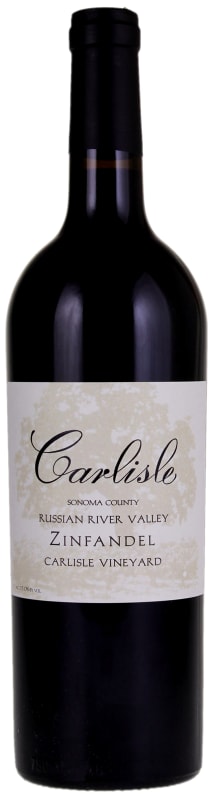


Winemaker Notes
The Carlisle Vineyard was planted back in 1927 on the eastern bench of the Laguna de Santa Rosa floodplain within the Russian River Valley. The region was a popular location of Italian immigrants back in the day, therefore is considered a sort of 'ground zero' of old-vine Zinfandel within the North Coast. The blend is predominately made up of Zinfandel with the remainder a mix of varieties such as: Alicante Bouschet, Petite Sirah, Grand Noir, Peloursin, Trousseau noir, Tempranillo, Muscadelle, Malvasia, Muscat, and 30 other varieties. The harvested grapes are fully destemmed, seeing a 10% bleed at crush to enhance concentration. The fruit then sees a long 24-day fermentation before being pressed into French oak, of which 23% is new. The finished wine is bottled unfined and unfiltered.
Vegan-Friendly
Professional Ratings
-
Jeb Dunnuck
The 2022 Zinfandel Carlisle Vineyard is a field blend with a ton of different varieties. It pours a deep youthful purple with a hint of pink and is ripe with black berries, savory sappy herbs, and dark earth. Full-bodied and well-structured, with bright acidity, ripe tannins, and a long finish, it demands another couple of years in bottle. Drink 2026-2040.
-
Wine Spectator
Deeply structured and distinctive, this is Russian River Zin at its best. Offers blackberry flavors laced with pepper, orange peel and roasted anise as this builds tension and richness toward refined tannins.


Unapologetically bold, spice-driven and jammy, Zinfandel has secured its title as the darling of California vintners by adapting well to the state's diverse microclimates and landscapes. Born in Croatia, it later made its way to southern Italy where it was named Primitivo. Fortunately, the imperial nursery of Vienna catalogued specimens of the vine, and it later made its way to New England in 1829. Parading the true American spirit, Zinfandel found a new home in California during the Gold Rush of 1849. Somm Secret—California's ancient vines of Zinfandel are those that survived the neglect of Prohibition; today these vines produce the most concentrated, ethereal and complex examples.

A standout region for its decidedly Californian take on Burgundian varieties, the Russian River Valley is named for the eponymous river that flows through it. While there are warm pockets of the AVA, it is mostly a cool-climate growing region thanks to breezes and fog from the nearby Pacific Ocean.
Chardonnay and Pinot Noir reign supreme in Russian River, with the best examples demonstrating a unique combination of richness and restraint. The cool weather makes Russian River an ideal AVA for sparkling wine production, utilizing the aforementioned varieties. Zinfandel also performs exceptionally well here. Within the Russian River Valley lie the smaller appellations of Chalk Hill and Green Valley. The former, farther from the ocean, is relatively warm, with a focus on red and white Bordeaux varieties. The latter is the coolest, foggiest parcel of the Russian River Valley and is responsible for outstanding Pinot Noir and Chardonnay.