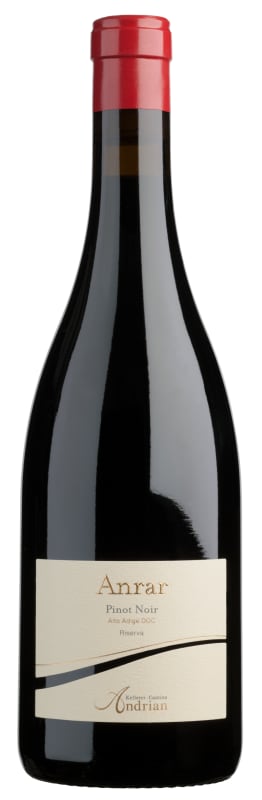


Winemaker Notes
Professional Ratings
-
Robert Parker's Wine Advocate
Straight from Candy Land, the Cantina Andriano (Kellerei Andrian) 2020 Alto Adige Pinot Noir Riserva Anrar shows immediate aromas of cherry lollipop and watermelon Jolly Rancher. On second nose, the aromas become musty and savory with sandalwood and men's cologne. The alcohol content is 14.5%, and that feels big for an Alpine Pinot Noir. The wine is fluid with an interesting evolution, and there is a hint of grilled herb or pressed rose on the close.
-
Wine Enthusiast
Expressive from the start, this Pinot Noir opens with aromas of fresh red berries, sweet baking spices and forest floor. The wine takes shape on the palate with an elegance that belies its youthfulness, as the flavors of cherry, clove, vanilla and fresh earth all work in harmony on the vibrant finish.


Thin-skinned, finicky and temperamental, Pinot Noir is also one of the most rewarding grapes to grow and remains a labor of love for some of the greatest vignerons in Burgundy. Fairly adaptable but highly reflective of the environment in which it is grown, Pinot Noir prefers a cool climate and requires low yields to achieve high quality. Outside of France, outstanding examples come from in Oregon, California and throughout specific locations in wine-producing world. Somm Secret—André Tchelistcheff, California’s most influential post-Prohibition winemaker decidedly stayed away from the grape, claiming “God made Cabernet. The Devil made Pinot Noir.”
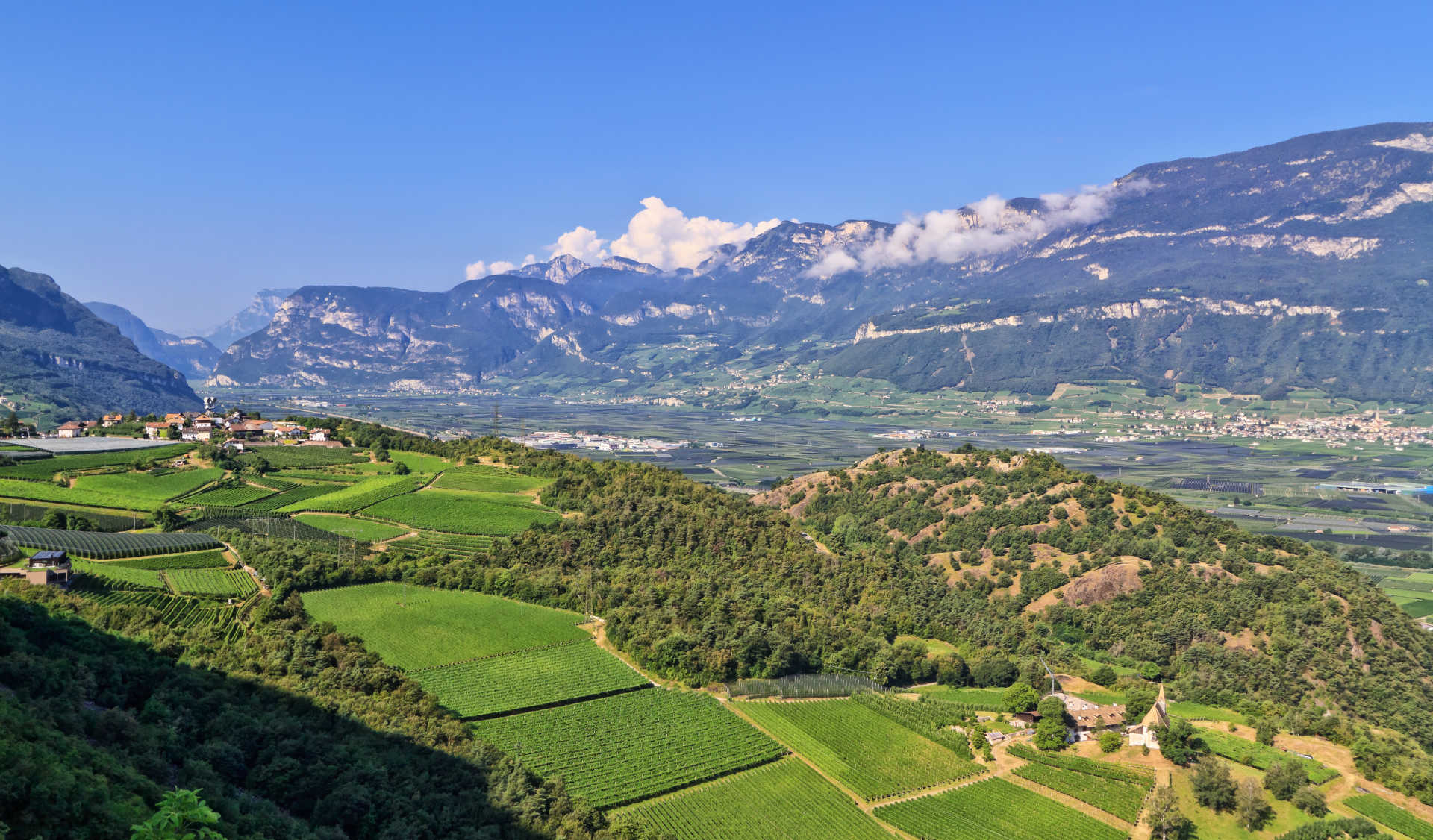
A mountainous northern Italian region heavily influenced by German culture, Trentino-Alto Adige is actually made up of two separate but similar regions: Alto Adige and Trentino.
Trentino, the southern half, is primarily Italian-speaking and largely responsible for the production of non-native, international grapes. There is a significant quantity of Chardonnay, Pinot Grigio and Merlot produced. But Trentino's native and most unique red variety, Teroldego, while still rare, is gaining popularity. It produces a deeply colored red wine rich in wild blackberry, herb, coffee and cocoa.
The rugged terrain of German-speaking Alto Adige (also referred to as Südtirol) focuses on small-scale viticulture, with great value placed on local varieties—though international varieties have been widely planted since the 1800s. Sheltered by the Alps from harsh northerly winds, many of the best vineyards are at extreme altitude but on steep slopes to increase sunlight exposure.
Dominant red varieties include the bold, herbaceous Lagrein and delicate, strawberry-kissed, Schiava, in addition to some Pinot Nero.
The primary white grapes are Pinot grigio, Gewürztraminer, Chardonnay and Pinot blanc, as well as smaller plantings of Sauvignon blanc, Müller Thurgau. These tend to be bright and refreshing with crisp acidity and just the right amount of texture. Some of the highest quality Pinot grigio in Italy is made here.