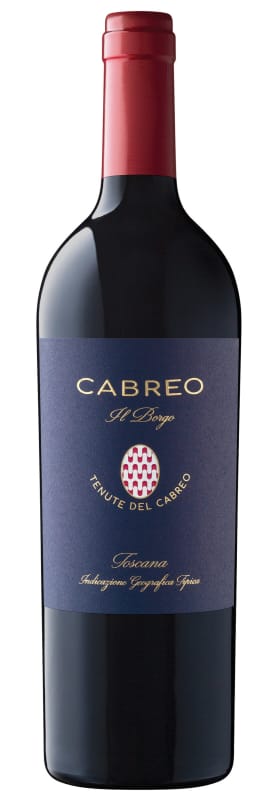


Winemaker Notes
Cabreo Il Borgo debuted in 1985 with its 1982 vintage. Just above Greve in the Chianti region, the Cabreo holdings include 124 acres planted to Sangiovese and Cabernet Sauvignon grown to produce Il Borgo. Chianti’s famed stony soils at 984 feet elevation are ideal for making wines with great aging potential. The word borgo refers to a small village, Montefioralle, that overlooks the vineyards.
The 2021 wine harvest in Tuscany was characterized by a dry and warm growing season, leading to lower yields but excellent grape concentration. Despite a summer drought, cooler nights helped preserve acidity, resulting in well-balanced wines with great aging potential. Winemakers praised the vintage for its structured tannins, deep flavors, and overall high quality, making it a standout year for Tuscan wines.
Professional Ratings
-
James Suckling
A spiced and savory red with chalky tannins and vibrant fruit character. Smooth and dusty on the dry, medium-bodied palate, with red berry, citrus peel and dried herb nuances. I like the zesty and minerally complexity. Good tension and length. Drink or hold.


Legendary in Italy for its Renaissance art and striking landscape, Tuscany is also home to many of the country’s best red wines. Sangiovese reigns supreme here, as either the single varietal, or a dominant player, in almost all of Tuscany’s best.
A remarkable Chianti, named for its region of origin, will have a bright acidity, supple tannins and plenty of cherry fruit character. From the hills and valleys surrounding the medieval village of Montalcino, come the distinguished and age-worthy wines based on Brunello (Sangiovese). Earning global acclaim since the 1970s, the Tuscan Blends are composed solely of international grape varieties or a mix of international and Sangiovese. The wine called Vine Nobile di Montepulciano, composed of Prognolo Gentile (Sangiovese) and is recognized both for finesse and power.