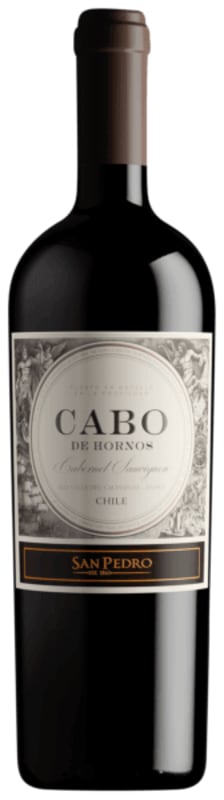


Winemaker Notes
Cabo de Hornos is the purest expression of Chilean Cabernet Sauvignon originating from volcanic soils. The grapes are planted at the foothills of the Andes mountain range in the Cachapoal Andes Valley, and are affected by winds which come down from the mountains, allowing for slow ripening and a concentrated wine of great character.
Professional Ratings
-
James Suckling
A pretty fleshy and polished cabernet sauvignon that shows really nice olives, tobacco and creamy chocolate. Slightly more opulent but it is quite juicy and bright on the palate with firm but structured tannins. Long, intense and seductive. Drink or hold.
-
Robert Parker's Wine Advocate
The balsamic, herbal, spicy and varietal Cabernet Sauvignon 2020 Cabo de Hornos was produced with fruit from Cachapoal Andes, from vineyards planted on volcanic soils. 2020 was a warm and very dry year when the wine finished with 14.6% alcohol, a full body and plenty of tannin. It fermented in 12,000-liter oak vats and matured in 225-liter barriques (50% new, 50% second and third use) for 22 months, where it also underwent malolactic fermentation.
-
Wine Enthusiast
In the Cachapoal Valley, vines grow at the foothills of the Andes Mountain range. This is where winemaker Gabriel Mustakis sources grapes to make a tasty Cabernet that has round tannins and good structure. The nose offers baking spices and leads to a generous palate of cranberry, strawberry, cinnamon and white-pepper flavors.


A noble variety bestowed with both power and concentration, Cabernet Sauvignon enjoys success all over the globe, its best examples showing potential to age beautifully for decades. Cabernet Sauvignon flourishes in Bordeaux's Medoc where it is often blended with Merlot and smaller amounts of some combination of Cabernet Franc, Malbecand Petit Verdot. In the Napa Valley, ‘Cab’ is responsible for some of the world’s most prestigious, age-worthy and sought-after “cult” wines. Somm Secret—DNA profiling in 1997 revealed that Cabernet Sauvignon was born from a spontaneous crossing of Cabernet Franc and Sauvignon Blanc in 17th century southwest France.

With an outstanding reputation for its bold reds, especially Cabernet Sauvignon, Syrah and Carmenere, the Cachapoal Valley spreads through the northern part of Chile’s Rapel Valley, with a continuous backdrop of the majestic Andes to its east. This region reaches as far north as the southern outskirts of the city of Santiago where it meets the famous region of the Maipo. The Cachapoal Valley produces no shortage of plum and berry dominated full-bodied reds with aromas and flavors reminiscent of mint, cocoa, spice or smoked meat.