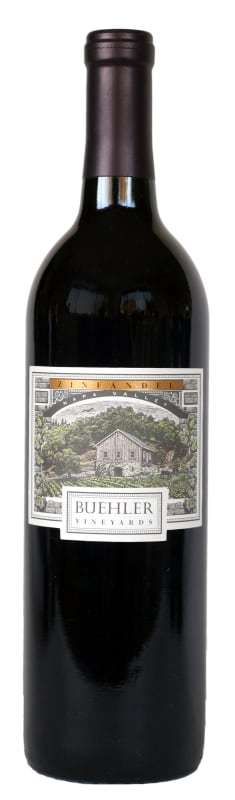


Winemaker Notes
The grapes we choose for our 2015 Buehler Vineyards Napa Valley Zinfandel are a mix of those off our estate vineyards and grapes from other select Napa Valley high quality, low-yielding vineyards. Dry-farmed for over 28 years, our 4.5 acre estate block consists of mature forty-one year-old vines which typically give us around 2.5 tons/acre of beautiful hillside Zinfandel fruit. Interspersed among the head-trained vines are a handful of Petite Sirah vines representing perhaps 5% of the total vines in this block. A traditional field companion to Zinfandel in preprohibition California vineyards, Petite Sirah contributes pepper, color, and tannin structure to the wine. The 2015 Napa Valley harvest delivered an early, high quality Zinfandel crop that left us wishing for more of a good thing. After a warm, early spring, the cool May weather interrupted fruit set and the resulting lighter clusters translated to a smaller than normal crop. As with most early harvests, the late October rains were welcomed since all grapes had long been picked and were safely fermenting away at the winery. Our Zinfandel was aged for 12 months in a combination of French and American oak barrels, 20% of which were new. At this level of “new wood”, the up-front endearing quality of Zinfandel can assert itself. Aromas of a briar patch on a hot summer day carry over to the palate and are carried in a mouth-filling, deeply layered, juicy package. The wine was crafted for immediate enjoyment but for those who enjoy a more complex wine displaying some bottle-aged character, aging for another two to three years is a good option.
Professional Ratings
-
Wine Enthusiast
This is a great value for a wine of such quality, made with a handful of Petite Sirah that grows in the same field-blended site. Layered and grippy, it shows structured blackberry and mocha flavors around secondary tones of leather and earth. Editors’ Choice


Undoubtedly proving its merit over and over, Napa Valley is a now a leading force in the world of prestigious red wine regions. Though Cabernet Sauvignon dominates Napa Valley, other red varieties certainly thrive here. Important but often overlooked include Merlot and other Bordeaux varieties well-regarded on their own as well as for their blending capacities. Very old vine Zinfandel represents an important historical stronghold for the region and Pinot noir is produced in the cooler southern parts, close to the San Pablo Bay.
Perfectly situated running north to south, the valley acts as a corridor, pulling cool, moist air up from the San Pablo Bay in the evenings during the hot days of the growing season, which leads to even and slow grape ripening. Furthermore the valley claims over 100 soil variations including layers of volcanic, gravel, sand and silt—a combination excellent for world-class red wine production.