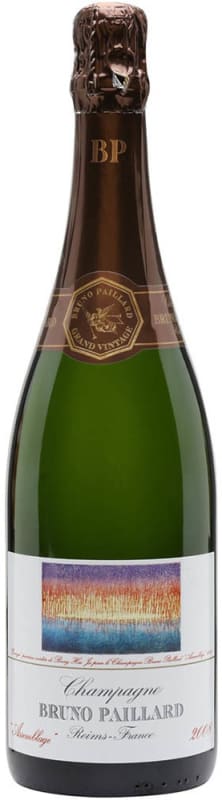


Winemaker Notes
Professional Ratings
-
James Suckling
Super fresh aromas of peaches, pastry, an array of citrus fruit, including a hint of pink grapefruit, dried flowers and a biscuity edge. The palate adds some richer fruit in the yellow-peach zone and a toasty, savory build, all the way through to roasted coffee at the finish. Drink or hold.
-
Robert Parker's Wine Advocate
From a fantastic vintage, the 2008 Assemblage Extra Brut (disgorged in November 2015) has a bright citrus color and shows a clear, super pure and deep bouquet with discreet, bright fruit but predominantly chalky-mineral aromas. The assemblage of Chardonnay and Pinot Noir (42% each) plus Pinot Meunier (16%) is a clear, straight, lean and mineral, bone dry, tight and concentrated Champagne with a lot of energy, precision and whole wheat flavors. The finish is still restrained but very dense, deep and complex in its purely mineral expression. A great wine that can be stored for decades. It was aged on the lees for seven years.
-
Wine Enthusiast
With seven years on lees before disgorgement, this wine already shows some maturity. It is rich while also having the intense acidity of the vintage. Turning to gold in color, it is balanced and dry as with all the Paillard wines, although with age that character becomes less obvious. Drink now for the fruit or until 2024.
-
Wine Spectator
A graceful version, with a sense of finesse, this offers a spiced profile of ripe nectarine, toast and fresh ginger underscored by Meyer lemon and chalk notes, balanced by a fine, airy mousse. Disgorged March 2015. Drink now through 2026.


Representing the topmost expression of a Champagne house, a vintage Champagne is one made from the produce of a single, superior harvest year. Vintage Champagnes account for a mere 5% of total Champagne production and are produced about three times in a decade. Champagne is typically made as a blend of multiple years in order to preserve the house style; these will have non-vintage, or simply, NV on the label. The term, "vintage," as it applies to all wine, simply means a single harvest year.

Associated with luxury, celebration, and romance, the region, Champagne, is home to the world’s most prized sparkling wine. In order to bear the label, ‘Champagne’, a sparkling wine must originate from this northeastern region of France—called Champagne—and adhere to strict quality standards. Made up of the three towns Reims, Épernay, and Aÿ, it was here that the traditional method of sparkling wine production was both invented and perfected, birthing a winemaking technique as well as a flavor profile that is now emulated worldwide.
Well-drained, limestone and chalky soil defines much of the region, which lend a mineral component to its wines. Champagne’s cold, continental climate promotes ample acidity in its grapes but weather differences from year to year can create significant variation between vintages. While vintage Champagnes are produced in exceptional years, non-vintage cuvées are produced annually from a blend of several years in order to produce Champagnes that maintain a consistent house style.
With nearly negligible exceptions, . These can be blended together or bottled as individual varietal Champagnes, depending on the final style of wine desired. Chardonnay, the only white variety, contributes freshness, elegance, lively acidity and notes of citrus, orchard fruit and white flowers. Pinot Noir and its relative Pinot Meunier, provide the backbone to many blends, adding structure, body and supple red fruit flavors. Wines with a large proportion of Pinot Meunier will be ready to drink earlier, while Pinot Noir contributes to longevity. Whether it is white or rosé, most Champagne is made from a blend of red and white grapes—and uniquely, rosé is often produce by blending together red and white wine. A Champagne made exclusively from Chardonnay will be labeled as ‘blanc de blancs,’ while ones comprised of only red grapes are called ‘blanc de noirs.’