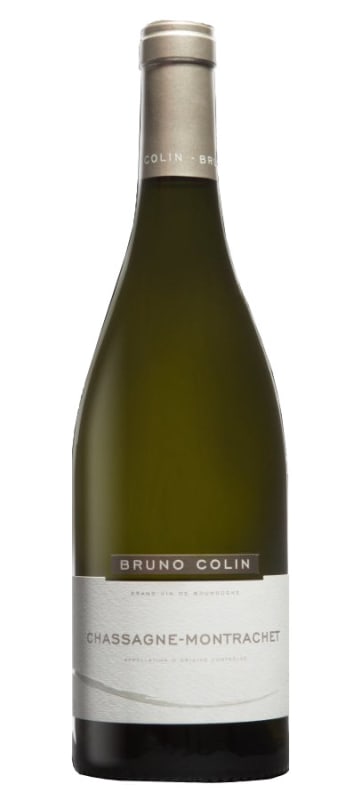


Winemaker Notes
This Chassagne-Montrachet cuvée is important for anyone interested in the typicity of the various Burgundian appellations. Here you have six different parcels spread out over all sides of the appellation, some with deeper clay soils, others with limestone predominance, some with younger vines, several with older vines. It’s essentially a blend of a bit of everything Chassagne has to offer. There is citrus and minerality as well as the generosity, depth, and density we love in a Chassagne.


One of the most popular and versatile white wine grapes, Chardonnay offers a wide range of flavors and styles depending on where it is grown and how it is made. While it tends to flourish in most environments, Chardonnay from its Burgundian homeland produces some of the most remarkable and longest lived examples. California produces both oaky, buttery styles and leaner, European-inspired wines. Somm Secret—The Burgundian subregion of Chablis, while typically using older oak barrels, produces a bright style similar to the unoaked style. Anyone who doesn't like oaky Chardonnay would likely enjoy Chablis.

A Côte de Beaune village of Burgundy most famous for its beautifully textured and powerful whites, Chassagne-Montrachet reaches farthest south in the Côte d’Or, save for the village of Santenay. It has three Grands Crus vineyards: Le Montrachet, Bâtard-Montrachet and Criots-Bâtard-Montrachet. Le Montrachet and Bâtard-Montrachet overlap with and are (confusingly) shared with the village of Puligny-Montrachet. But Chassagne-Montrachet bears sole ownership of the Criots-Bâtard-Montrachet Grand Cru.
The beauty doesn’t stop there as the village has a great many outstanding Premiers Crus wines and village level wines. Most famous Premiers Crus vineyards include Les Chenevottes, Clos de la Maltroie, En Cailleret and Les Ruchottes. Also, village level wines offer many lovely examples of what Chassagne-Montrachet has to offer, but at more approachable price points and perhaps less demand of waiting.
The best sites in Chassagne-Montrachet have complex soils of sedimentary rock and limestone (with less marl). Whites, which are by law composed of 100% Chardonnay (as in all classified white Burgundy from Côte d’Or), have steely power, bright and concentrated citrus, stone or tropical fruit characteristics and attractive textures ranging from plush to tactile, grippy and mineral-driven.
There is some fine Pinot Noir produced from the village. These wines tend to be high-toned and earthy, with wild herb aromas and suave tannins.