

Winemaker Notes
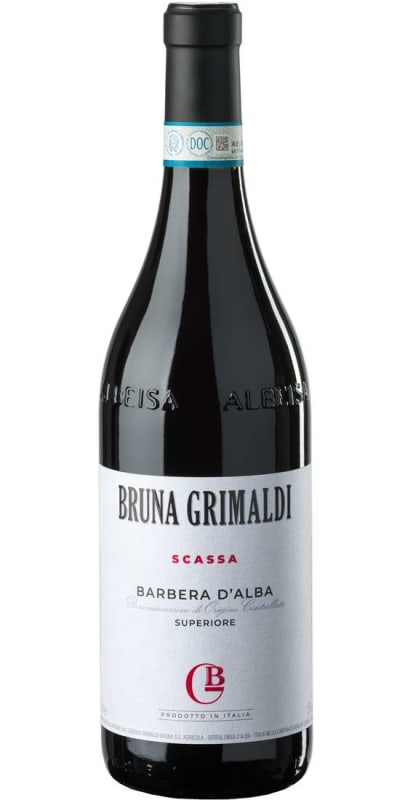
Bruna Grimaldi Scassa Barbera d'Alba offers intense aromas of red fruits, sour cherries with graphite and menthol notes on the nose. On the palate it is rich and concentrated, mineral and fresh. This freshness gives it longevity and makes it a versatile wine in terms of food pairing.
Professional Ratings
-
Robert Parker's Wine Advocate
The Bruna Grimaldi 2023 Barbera d'Alba Superiore Scassa comes from a site that was so difficult to farm, rocks had to be broken, hence the wine's name—"Scassa" refers to this difficult clearing process. However, fruit is actually blended from five sites in three villages: Roddi, Diano d'Alba and Sinio. The wine delivers a tight and restrained interpretation of Barbera that doesn't lean into extraction or overdone flavors. Instead, it reveals a contained bouquet with bright cherry fruit and blackberry, some spice and sweet almond, but it never goes overboard, and that's the best thing about this pretty wine. In fact, it is among the more gastronomic of the Barbera d'Albas on the market today.


Friendly and approachable, Barbera produces wines in a wide range of styles, from youthful, fresh and fruity to serious, structured and age-worthy. Piedmont is the most famous source of Barbera; those from Asti and Alba garner the most praise. Barbera actually can adapt to many climates and enjoys success in some New World regions. Somm Secret—In the past it wasn’t common or even accepted to age Barbera in oak but today both styles—oaked and unoaked—abound and in fact most Piedmontese producers today produce both styles.

An historic village situated right in between the famous regions of Barolo and Barbaresco, Alba is also the name for the larger wine region surrounding the village.
In a sense, “Alba” is a catch-all phrase, and includes the declassified Nebbiolo wines made in Barolo and Barbaresco, as well as the Nebbiolo grown just outside of these regions’ borders. In fact, Nebbiolo d’Alba is a softer, less tannic and more fruit-forward wine ready to drink within just a couple years of bottling. It is a great place to start if you want to begin to understand the grape. Likewise, the even broader category of Langhe Nebbiolo offers approachable and value-driven options as well.
Barbera, planted alongside Nebbiolo in the surrounding hills, and referred to as Barbera d’Alba, takes on a more powerful and concentrated personality compared to its counterparts in Asti.
Dolcetto is ubiquitous here and, known as Dolcetto d'Alba, can be found casually served alongside antipasti on the tables of Alba’s cafes and wine bars.
Not surprisingly, given its location, Alba is recognized as one of Italy’s premiere culinary destinations and is the home of the fall truffle fair, which attracts visitors from worldwide every year.