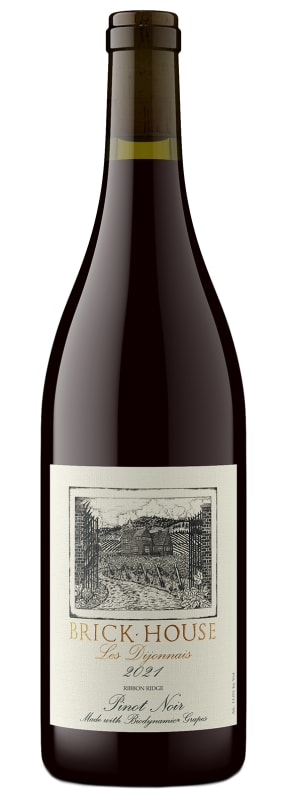


Winemaker Notes
Professional Ratings
-
Jeb Dunnuck
From two blocks next to the winery, with three different clones planted in 1995, the ripe red-hued 2021 Pinot Noir Les Dijonnais is lush with notes of wild raspberry, wild herbs, and baking spices. Medium to full-bodied, it is approachable up front but has great underlying structure. It’s drinking well now but has lots of life ahead over the next 8-10 years if stored properly.
-
James Suckling
A fresh and pretty pinot with fresh raspberries, orange zest, pomegranates, rose petals and nutmeg on the nose. It’s medium-bodied, with sleek, fine tannins and crunchy acidity. Lots of energy on a vibrant finish. From biodynamically grown grapes with Demeter certification. Drink now or hold.
-
Robert Parker's Wine Advocate
I tasted the 2021 Pinot Noir Les Dijonnais just before it was due to be bottled. It takes some air to reveal flint-laced cranberry, blueberry, earth and floral tones on the nose. The palate is more open, offering concentrated berry fruit structured by chalky tannins and bright acidity, and it has a long, floral finish. Barrel Sample: 91-93
-
Wine Spectator
Dynamic yet elegantly layered, with a beam of fresh acidity that drives vibrant cranberry and cherry flavors. Reveals crushed stone and dusky spice accents, finishing with medium-grained tannins.


Thin-skinned, finicky and temperamental, Pinot Noir is also one of the most rewarding grapes to grow and remains a labor of love for some of the greatest vignerons in Burgundy. Fairly adaptable but highly reflective of the environment in which it is grown, Pinot Noir prefers a cool climate and requires low yields to achieve high quality. Outside of France, outstanding examples come from in Oregon, California and throughout specific locations in wine-producing world. Somm Secret—André Tchelistcheff, California’s most influential post-Prohibition winemaker decidedly stayed away from the grape, claiming “God made Cabernet. The Devil made Pinot Noir.”

Ribbon Ridge is a regular span of uplifted, marine, sedimentary soils (called Willakenzie), whose highest ridge elevations twist like a ribbon. An early settler from Missouri named Colby Carter noticed this unique topography and gave the region its name in 1865—though it wasn’t declared its own AVA until 140 years later, in 2005. The AVA is enclosed by mountains on all sides between Yamhill-Carlton and the Chehalem Mountains, and is actually part of the larger Chehalem Mountains AVA. Its soils have a finer texture than its neighbors with parent materials composed of sandstone, siltstone, and mudstone. Given its presence of natural aquifers in this five square mile area, most vineyards are actually easily dry farmed!