
Winemaker Notes
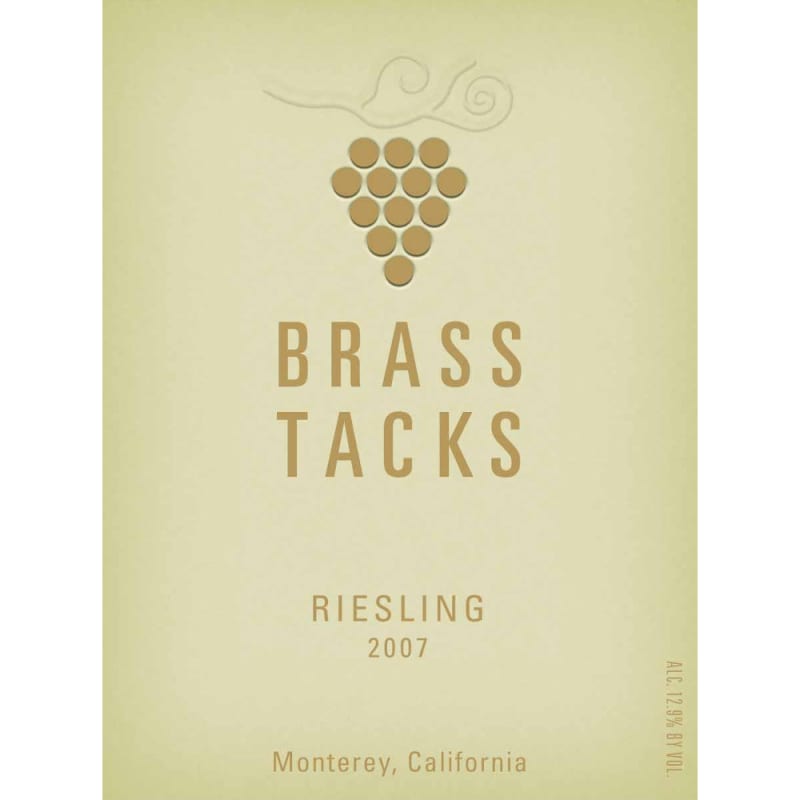
Brass Tacks Riesling offers crisp clean notes of fresh peach, honey and apricot with mineral qualities that is balanced by bright acidity. This Riesling offers an "off-dry", or slightly sweet, style that makes is a perfect companion for lighter fish dishes and Asian take-out.
Let's get down to brass tacks, shall we? At Brass Tacks, we believe the essence of California wine is the fruit. So our winemaking starts in the vineyard, where we cultivate the unique characteristics of each varietal and vineyard. The result is a wine that isn't over-manipulated, allowing the personality of the fruit to shine through.
brass tacks (noun) - the most fundamental considerations; essentials; realities (usually used in the phrase "get down to brass tacks").
Professional Ratings
-
Wine Enthusiast
A beautiful Riesling, perfect for a cocktail or with a wide range of fare. Bone dry and richly acidic, it shows true varietal flavors of citrus, honeysuckle, diesel or lighter fluid, minerals and gardenia flower. This is a wine that sommeliers should scoop up, but only 450 cases were produced. Editors’ Choice.


Riesling possesses a remarkable ability to reflect the character of wherever it is grown while still maintaining its identity. A regal variety of incredible purity and precision, this versatile grape can be just as enjoyable dry or sweet, young or old, still or sparkling and can age longer than nearly any other white variety. Somm Secret—Given how difficult it is to discern the level of sweetness in a Riesling from the label, here are some clues to find the dry ones. First, look for the world “trocken.” (“Halbtrocken” or “feinherb” mean off-dry.) Also a higher abv usually indicates a drier Riesling.
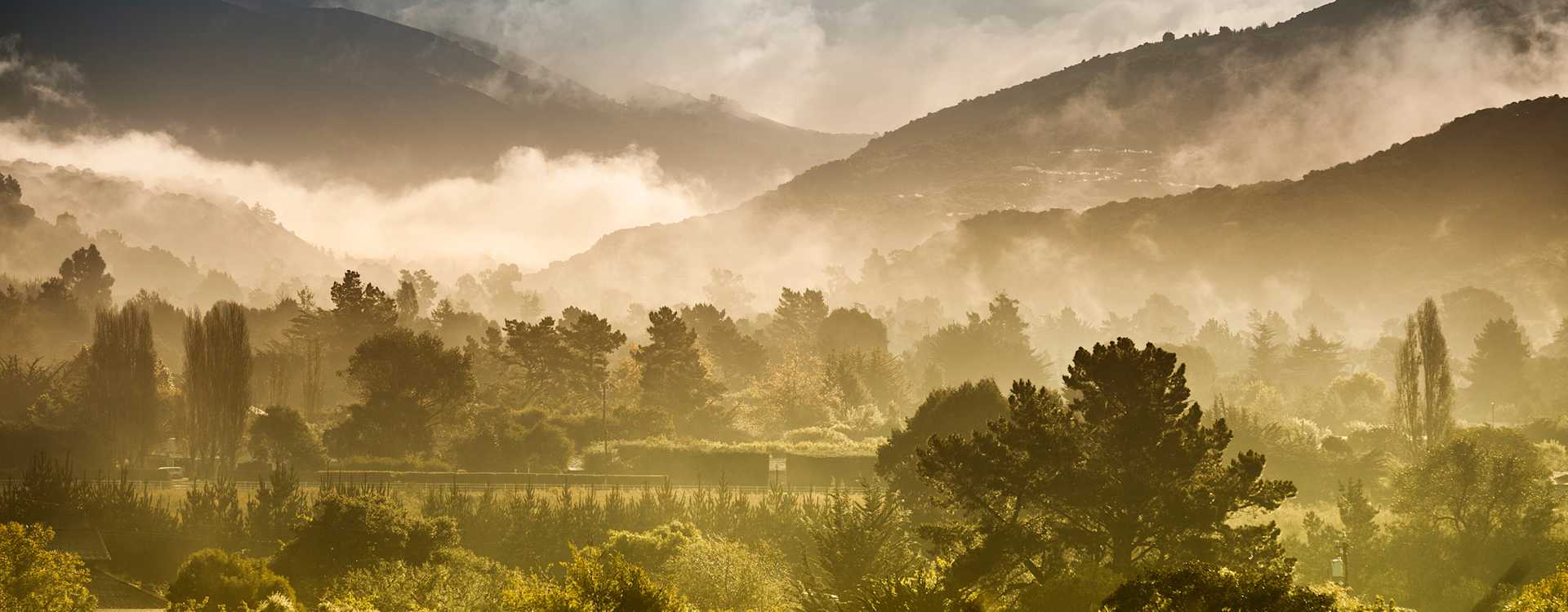
The largest and perhaps most varied of California’s wine-growing regions, the Central Coast produces a good majority of the state's wine. This vast California wine district stretches from San Francisco all the way to Santa Barbara along the coast, and reaches inland nearly all the way to the Central Valley.
Encompassing an extremely diverse array of climates, soil types and wine styles, it contains many smaller sub-AVAs, including San Francisco Bay, Monterey, the Santa Cruz Mountains, Paso Robles, Edna Valley, Santa Ynez Valley and Santa Maria Valley.
While the Central Coast California wine region could probably support almost any major grape varietiy, it is famous for a few Central Coast reds and whites. Pinot Noir, Chardonnay, Cabernet Sauvignon and Zinfandel are among the major ones. The Central Coast is home to many of the state's small, artisanal wineries crafting unique, high-quality wines, as well as larger producers also making exceptional wines.