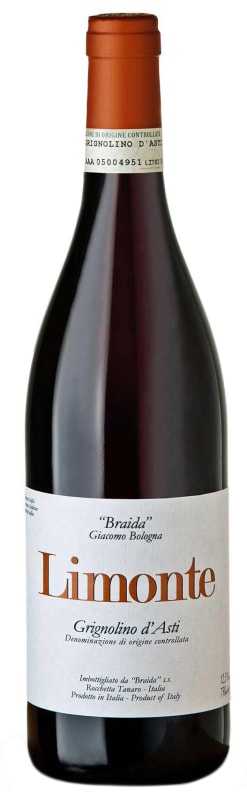


Winemaker Notes
Bright garnet red with ruby highlights. Floral scents featuring rose, freshly cut hay, fruit such as apricots and yellow plums, accompanied by a corollary of wild strawberry, raspberry and cherry. Fresh and vinous palate, elegantly fleshy, featuring the same rose and fruits expressed in the nose with the same intensity. Initially fine tannins subsequently grow in importance. Good balance and persistence.
Professional Ratings
-
Wine Enthusiast
Grignolio, it is in the name, you cannot help but grin from this wine. Opening with aromas of drying raspberries, strawberries and cranberries that merge with notes of sage, thyme, and dusty earth on the joyful nose. Crunchy red berries pop on the palate, with blood orange and citrus notes adding a zestiness to the palate. The finish brings a savory twist of rosemary and mint, all elevated by vibrant acidity. A wine that also likes a chill.
-
James Suckling
This is fruity and racy with notes of crushed red berries, dried orange peel and Mediterranean herbs. Medium-bodied, tense and crunchy on the palate, with dusty tannins and a bright, refreshing aftertaste.


Grignolino actually contains a convincing amount of structure and phenolic complexity despite its transparent, strawberry hue. This is because the Grignolino berry holds three seeds instead of the usual two, contributing more tannins when crushed. It is native to the Monferrato hills with a growing region that overlaps with the Asti DOCG. Somm Secret—Until the end of the 1700’s, Grignolino was used for medicinal purposes because of its high tannin content, which acts as an antiseptic.

Recognized as the source of the best Barbera in all of Italy, Asti is a province (as well as major city) in Piedmont, consisting of a gentle, rolling landscape with vineyards, farmland and forests alternating throughout.
Barbera d’Asti can be made in an array of styles from relatively straightforward, fruity and ready for consumption early, to the more concentrated, oak aged version with an ability to cellar impressively for 10-15 years and beyond. Some of the very best sites for Barbera in Asti are concentrated in the subzone of Nizza Monferrato. Other red varieties grown here include Freisa, Grignolino and Dolcetto, which can be bottled varietally or blended into Barbera.
Historically consumers commonly associated the Asti region with Asti Spumante and Moscato d’Asti, both playful, aromatic, sparkling wines made from the Muscat grape. Asti Spumante is less sweet, fully fizzy and more alcoholic (yet still clocking in at only around 9% alcohol) while Moscato d’Asti is sweeter, gently sparkling (“frizzante”) and closer to 5 or 6% alcohol. Each is produced in stainless steel tanks to preserve the fresh and fruity flavors of the grape, often including peach, apricot, lychee and rose petal. Asti is also the spot for the pink-hued Brachetto d'Acqui, a slightly sparkling wine ready to charm with its raspberry and rose flavors and aromas.