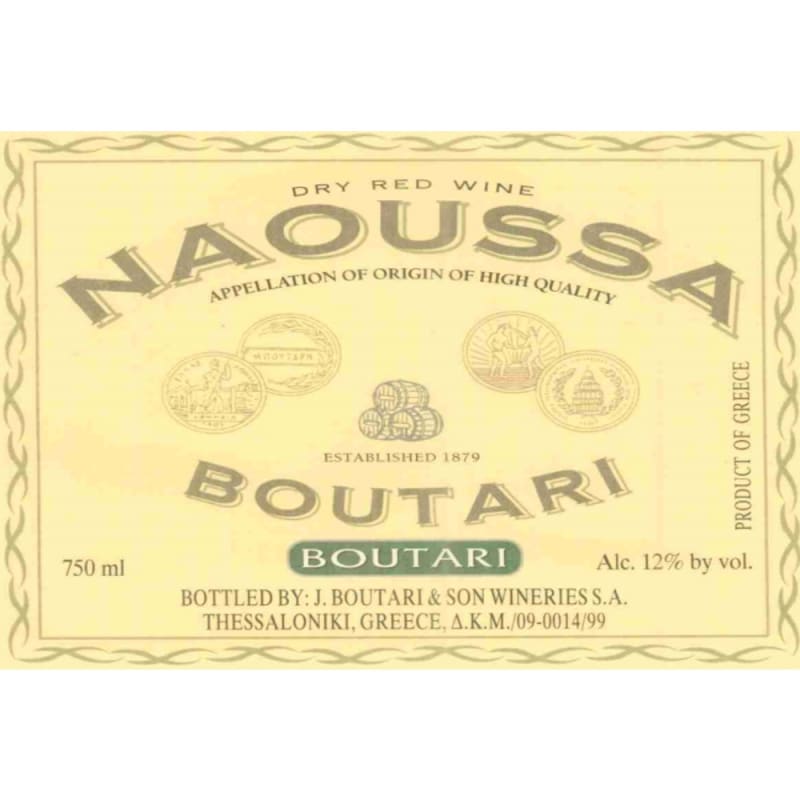

Winemaker Notes
The color is deep red. Aromas include cedar, olive, tomato juice, spices and mint.
The palate is balanced and full-bodied with pleasant acidity and sweet flavors of vanilla, cocoa and berries .
Professional Ratings
-
Robert Parker's Wine Advocate
The 2007 Naoussa has evolved beautifully, even better than I thought it would, and I have to say – it is quite a deal. This bottling is usually a fairly refined Xinomavro that manages to show some steel, elegance and balance at the same time, and that is certainly true in 2007. At its very attractive price point, it is a steal and I have come to think that it consistently offers a lot of value. Some may prefer their Xinomavros a little more rustic, but this bottling has fine sensibilities. Drink now-2023.


Native to Greece, Xinomavro is widely regarded the finest red wine of the country. Its name literally means “acid black”, and attains fullest potential in the country’s northwest region of Naoussa. These single varietal bottlings of Xinomavro (blending is not allowed here) are often compared to the fine Barolos of Italy for their structure, finesse and age-worthiness. While its vines are fickle and blue-black grapes grow in tight clusters, similar to Nebbiolo, Xinomavro actually appears unrelated. Somm Secret—The use of French oak can help tame Xinomavro but too much can overwhelm it. Some eschew oak entirely during winemaking; other producers use locally-grown walnut.

A picturesque Mediterranean nation with a rich wine culture dating back to ancient times, Greece has so much more to offer than just retsina. Between the mainland and the country’s many islands, a wealth of Greek wine styles exists, made mostly from Greece’s plentiful indigenous varieties. After centuries of adversity after Ottoman rule, the modern Greek wine industry took off in the late 20th century with an influx of newly trained winemakers and investments in winemaking technology.
The climate—generally hot Mediterranean—can vary a bit with latitude and elevation, and is mostly moderated by cool maritime breezes. Drought can be an issue for Greek wine during the long, dry summers, sometimes necessitating irrigation.
Over 300 indigenous grapes have been identified throughout Greece, and though not all of them are suitable for wine production, future decades will likely see a significant revival and refinement of many of these native Greek wine varieties. Assyrtiko, the crisp, saline Greek wine variety of the island of Santorini, is one of the most important and popular white wine varieties, alongside Roditis, Robola, Moschofilero, and Malagousia. Muscat is also widely grown for both sweet and dry wines. Prominent red wine varieties include full-bodied and fruity Agiorghitiko, native to Nemea; Macedonia’s savory, tannic Xinomavro; and Mavrodaphne, used commonly to produce a Port-like fortified wine in the Peloponnese.