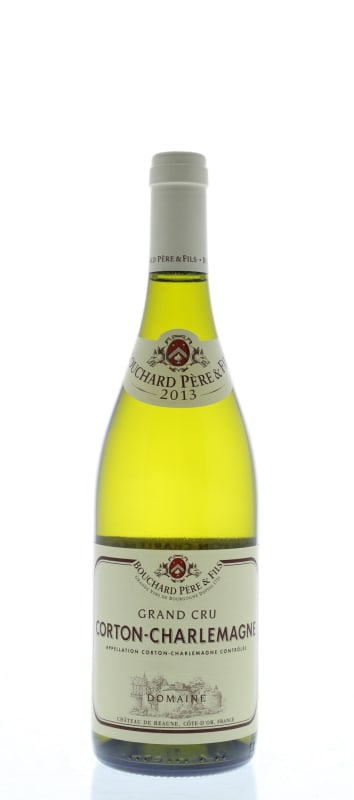


Winemaker Notes
Professional Ratings
-
James Suckling
A fabulous Corton Charlemagne with an impressive density, yet the bright acidity gives this white agility. Full body, compressed and layered mouthfeel. Salty and minerally finish. Drink now or hold.
-
Robert Parker's Wine Advocate
Bouchard's 2013 Corton-Charlemagne Grand Cru is showing very well, wafting from the glass with an expressive bouquet of yellow orchard fruit, pear, orange oil, praline and wheat toast. On the palate, it's medium to full-bodied, deep and intense, with succulent acids, good concentration and a penetrating finish. While this Corton-Charlemagne is quite open for inspection already, it's nicely balanced and displays good structural tension. Bottled under Diam 10, it should enjoy more than another decade of longevity.


One of the most popular and versatile white wine grapes, Chardonnay offers a wide range of flavors and styles depending on where it is grown and how it is made. While it tends to flourish in most environments, Chardonnay from its Burgundian homeland produces some of the most remarkable and longest lived examples. California produces both oaky, buttery styles and leaner, European-inspired wines. Somm Secret—The Burgundian subregion of Chablis, while typically using older oak barrels, produces a bright style similar to the unoaked style. Anyone who doesn't like oaky Chardonnay would likely enjoy Chablis.

A classic source of exceptional Chardonnay as well as Pinot Noir, the Côte de Beaune makes up the southern half of the Côte d’Or. Its principal wine-producing villages are Pernand-Vergelesses, Aloxe-Corton, Beaune, Pommard, Volnay, Meursault, Puligny-Montrachet and Chassagne-Montrachet.
The area is named for its own important town of Beaune, which is essentially the center of the Burgundy wine business and where many negociants center their work. Hospices de Beaune, the annual wine auction, is based here as well.