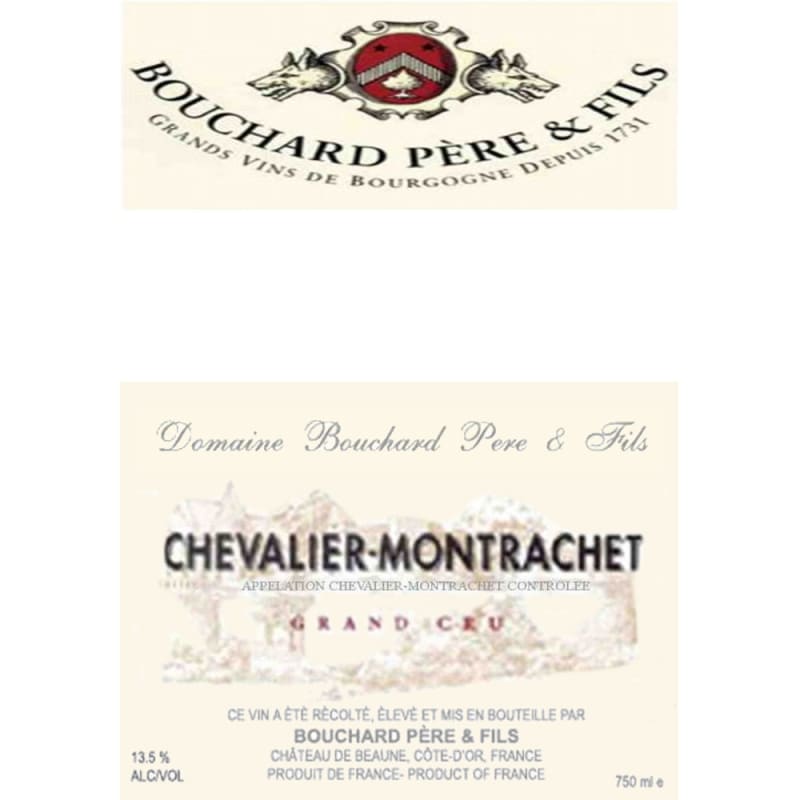

Winemaker Notes
"Good pale color. Cool, pungent aromas of orange rind, ginger and chlorophyll; smells like grapes. At once suave and powerful on entry, then chewy and utterly primary in the middle, with superb acids intensifying the flavors of flowers, minerals and soft citrus fruits. Best today on the endless rising finish, which saturates the palate with minerals. A great 2006 in the making."
-International Wine Cellar 93-96
"Entices with its floral and citronella aromas, then follows through with macaroon, lime and mineral flavors. These are set against a refined structure and a creamy texture that lends a lighter-than-air feel. The finish goes on and on. Best from 2010 through 2025. 70 cases imported."
-Wine Spectator
Professional Ratings
-
Robert Parker's Wine Advocate
Mint, talcum, marzipan, and candied lemon dominate the penetratingly high-toned aromas of their 2006 Chevalier-Montrachet, which exhibits a remarkable alliance of textural richness and citric brightness, and a finish of fascinating, low-toned, chalk, stone, citrus zest, and nut oils. For all of the sheer ripeness on display here, there is no sense of superficial sweetness, with fresh lime saturating a palate of formidable density and imposingly ripe pit fruits. And for all of this wine’s more than 14% alcohol, there is barely a hint of warmth. It exhibits to an even greater degree than the corresponding Meursault Perrieres a nearly ineffable, for lack of a better word “mineral” character, as well as an uncanny combination of amplitude and elegance; sheer mass yet vivacity. This memorably long beauty should age well for at least a dozen years. 94-95.


One of the most popular and versatile white wine grapes, Chardonnay offers a wide range of flavors and styles depending on where it is grown and how it is made. While it tends to flourish in most environments, Chardonnay from its Burgundian homeland produces some of the most remarkable and longest lived examples. California produces both oaky, buttery styles and leaner, European-inspired wines. Somm Secret—The Burgundian subregion of Chablis, while typically using older oak barrels, produces a bright style similar to the unoaked style. Anyone who doesn't like oaky Chardonnay would likely enjoy Chablis.

Dive into the holiday season with great value French wines from Bourgogne! If you don’t know the term, Bourgogne is the locals’ preferred word for Burgundy to highlight its winemaking heritage and culture. This prestigious wine region is home to lesser-known yet expressive Village appellations, such as Mercurey and Saint Bris. Whether it’s a dinner with friends, a family gathering, or a gift for the wine buff in your life, Bourgogne, or Burgundy wine, is perfect for any end-of-the-year occasion. Shop Burgundy wines today!
A legendary wine region setting the benchmark for Pinot Noir and Chardonnay worldwide, Burgundy is a perennial favorite of many wine lovers. While the concept of ‘terroir’ reigns supreme here—soil type, elevation and angle of each slope—this is a region firmly rooted in tradition. Because of the Napoleonic Code requiring equal distribution of property and land among all heirs, vineyard ownership in Burgundy is extremely fragmented, with some growers responsible for just one or two rows of vines. This system has led to the predominance of the "negociant"—a merchant who purchases fruit from many different growers to vinify and bottle together.
Burgundy’s cool, continental climate and Jurassic limestone soils are perfect for the production of elegant, savory and mineral-driven Chardonnay and Pinot Noir with plenty of acidity. Vintage variation is of particular importance for Burgundy wine, as weather conditions can be variable and unpredictable. In some years spring frost and hail must be overcome.
The Côte d’Or, a long and narrow escarpment, forms the heart of the region, split into the Côte de Nuits to the north and the Côte de Beaune to the south. The former is home to many of the world’s finest Pinot Noir wines, while Chardonnay plays a much more prominent role in the latter, though outstanding red and white Burgundy wines are produced throughout. Other key appellations include the Côte Chalonnaise, home to great value Pinot Noir and sparkling Crémant de Bourgogne. The Mâconnais produces soft and round, value-driven Chardonnay while Chablis, the northernmost region of Burgundy, is a paradise for any lover of bright, acid-driven and often age-worthy versions of the grape.