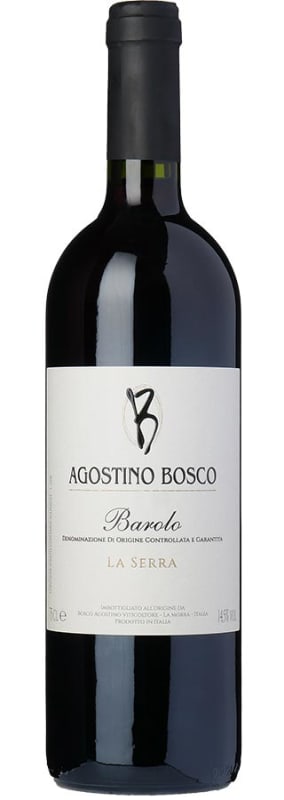


Winemaker Notes
From the historic La Serra Vineyard in La Morra this Barolo sees stainless steel fermentation, aging is 6-7 months in barrique and then 23-24 months in 2000l botti. Bottle aged for seven months prior to release. Look for a structured vibrant tannins, flavors of cherry, aromatic herbs, anise, and violets.
Professional Ratings
-
James Suckling
A tight, compact Barolo with dried-strawberry, cedar, chocolate and dried-mushroom character. Full body, firm and chewy tannins and a focused finish. Needs time to open. Better after 2023.
-
Robert Parker's Wine Advocate
The Agostino Bosco 2016 Barolo La Serra draws its fruit from La Morra, a subzone known for its silky tannins and elegant Nebbiolo aromas. This wine shows those qualities very nicely, perhaps adding extra power and fruit definition that is characteristic of the 2016 growing season. I do notice that the tannic presence of the wine is well developed, suggesting that this vintage could use extra years in the cellar to better unwind and soften. Dark cherry fruit is followed by licorice, dried orange peel and pressed rose.
-
Wine Enthusiast
Intense aromas of rose petal, new leather and tobacco emerge from the glass. The taut balanced palate offers raspberry, sour cherry, toasted hazelnut and licorice alongside youthfully austere tannins and fresh acidity. Drink 2025–2033.


Attracting the most glory, prestige and fame to the Piedmont region, Nebbiolo in all of its expressions—Barolo, Barbaresco, Roero, Ghemme and Gattinara—creates a complex wine, truly unique for its delicate qualities combined with strength and a great potential to improve over time.
But Nebbiolo isn’t all there is to red wine from Piedmont! Barbera is the most planted variety and historically most popular as a dependable, food-friendly, everyday wine.
Beyond these two, a surprising number of red varieties call Piedmont their home. Worth a try include Dolcetto for its bold concentration and aromas of spice cake. Other grapes to investigate include Freisa, Croatina, Brachetto, Grignolino and Pelaverga.