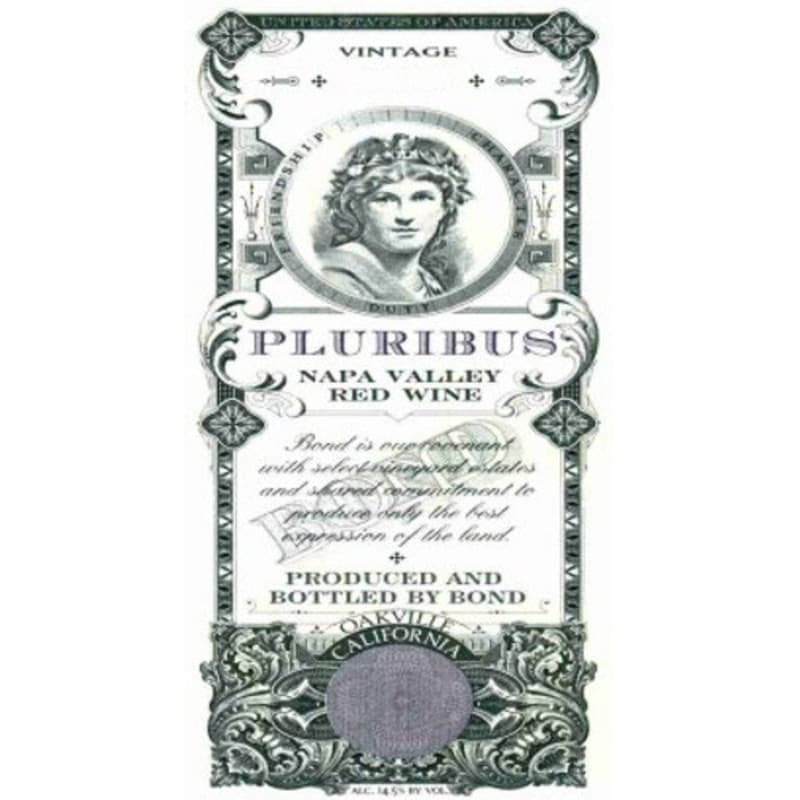

Winemaker Notes
Professional Ratings
-
Robert Parker's Wine Advocate
The 2006 E Pluribus, like all of these Cabernet Sauvignons, is youthful, with an opaque purple color and a big, sweet nose of blueberry liqueur intermixed with spring flowers and wet rocks. Full-bodied, powerful, and backward, with sweet tannin but formidable structure, this wine needs to be cellared for 4-5 years and drunk over the following 25 years.
-
Wine Enthusiast
Very dark, dramatic, opulent, but young. Opens with brooding aromas of black currants, cassis and spices, and turns dense in tannins in the mouth. Deeply refined, concentrated, intense, bone dry. A classic Napa wine in every sense, and one in need of extended cellaring. 2012–2018. The release date is Spring 2010.
-
Wine & Spirits
Bill Harlan started the Bond project "to establish a stable of grand crus," as he describes it. Paul Roberts, formerly of The French Laundry, is general manager, the counterpart of Don Weaver, who has worked with Harlan for the past 25 years. We tasted five single-vineyard wines from Bond for this issue, all made the same way, each expressing a different site in the Napa Valley. Pluribus grows at the Oberndorf Vineyard, 900 feet up Spring Mountain, the vines planted in 2000 on fractured volcanic soil. It's a powerful, black and tannic wine in 2006 (Roberts describes it as the Château Montrose of Bond's stable). With air, the masculine arrogance of the tannin slowly relents, turning from savory black olive toward cassis and currant. What's remarkable about the wine is its penetrating depth, a deep well of flavor in the glass. Its richness is another compelling factor: It comes directly from the structure, so rather than feeling heavy, the wine feels complete and fresh.


One of the most prestigious wines of the world capable of great power and grace, Napa Valley Cabernet is a leading force in the world of fine, famous, collectible red wine. Today the Napa Valley and Cabernet Sauvignon are so intrinsically linked that it is difficult to discuss one without the other. But it wasn’t until the 1970s that this marriage came to light; sudden international recognition rained upon Napa with the victory of the Stag’s Leap Wine Cellars 1973 Cabernet Sauvignon in the 1976 Judgement of Paris.
Cabernet Sauvignon undoubtedly dominates Napa Valley today, covering half of the land under vine, commanding the highest prices per ton and earning the most critical acclaim. Cabernet Sauvignon’s structure, acidity, capacity to thrive in multiple environs and ability to express nuances of vintage make it perfect for Napa Valley where incredible soil and geographical diversity are found and the climate is perfect for grape growing. Within the Napa Valley lie many smaller sub-AVAs that express specific characteristics based on situation, slope and soil—as a perfect example, Rutherford’s famous dust or Stags Leap District's tart cherry flavors.