


Winemaker Notes
In the glass, this VZ19 edition opens with fruity notes of apple, rhubarb, quince and mirabelle plum. The rich, complex nose then develops towards hazelnut aromas. On the palate, a wonderful creamy effervescence yields to a delectable and expressive quality. Exotic flavors, with brioche and hints of stewed fruit, precede a saline finish. PN VZ19 is a wine to be enjoyed by enthusiasts interested in the expression of Pinot Noir from across the Champagne region.
Professional Ratings
-
Tasting Panel
The NV (2019) PN VZ is another terrific wine in this new range of Champagnes from Bollinger that is now in its fifth release. Exotic floral and spice notes play off a core of Pinot fruit in this captivating, mid-weight offering. Time in the glass accents the wine's inner sweetness and perfume. Pear, mint, jasmine and white pepper linger. In this release, the (2019) PN VZ is like a mini-Vieilles Vignes Françaises. It's an incredibly racy, sexy Blanc de Noirs. This release is based on 2019, with 50% reserve wines back to 2009. About half of the reserve wines were aged in magnum. Dosage is 6 grams per liter.
-
Wine Spectator
There's real drive and focus to this harmonious Champagne, with racy acidity enmeshed in the finely detailed, satinlike mousse and enlivening a lovely range of ripe cherry and cassis fruit and Marcona almond flavors, plus a touch of Gran Marnier liqueur. Delicate notes of spices, white blossoms and graphite linger on the finish. Pinot Noir. Disgorged January 2024. Drink now through 2035.


In 1829, Champagne Bollinger introduced an instantly recognizable, dry, toasty style that connoisseurs around the globe have coveted ever since. Six generations of the Bollinger family have maintained that trademark style, and Bollinger is one of the rare Grande Marque houses to be owned, controlled and managed by the same family since it was founded.
With 399 acres of vineyards situated in the best Grands Crus and Premiers Crus villages, Bollinger relies on its own estate for nearly two-thirds of its grape requirements, including the Pinot Noir that gives its Champagne its distinctive roundness and elegance. Bollinger is one of a select few houses that can control the quality of its grape supply so carefully.
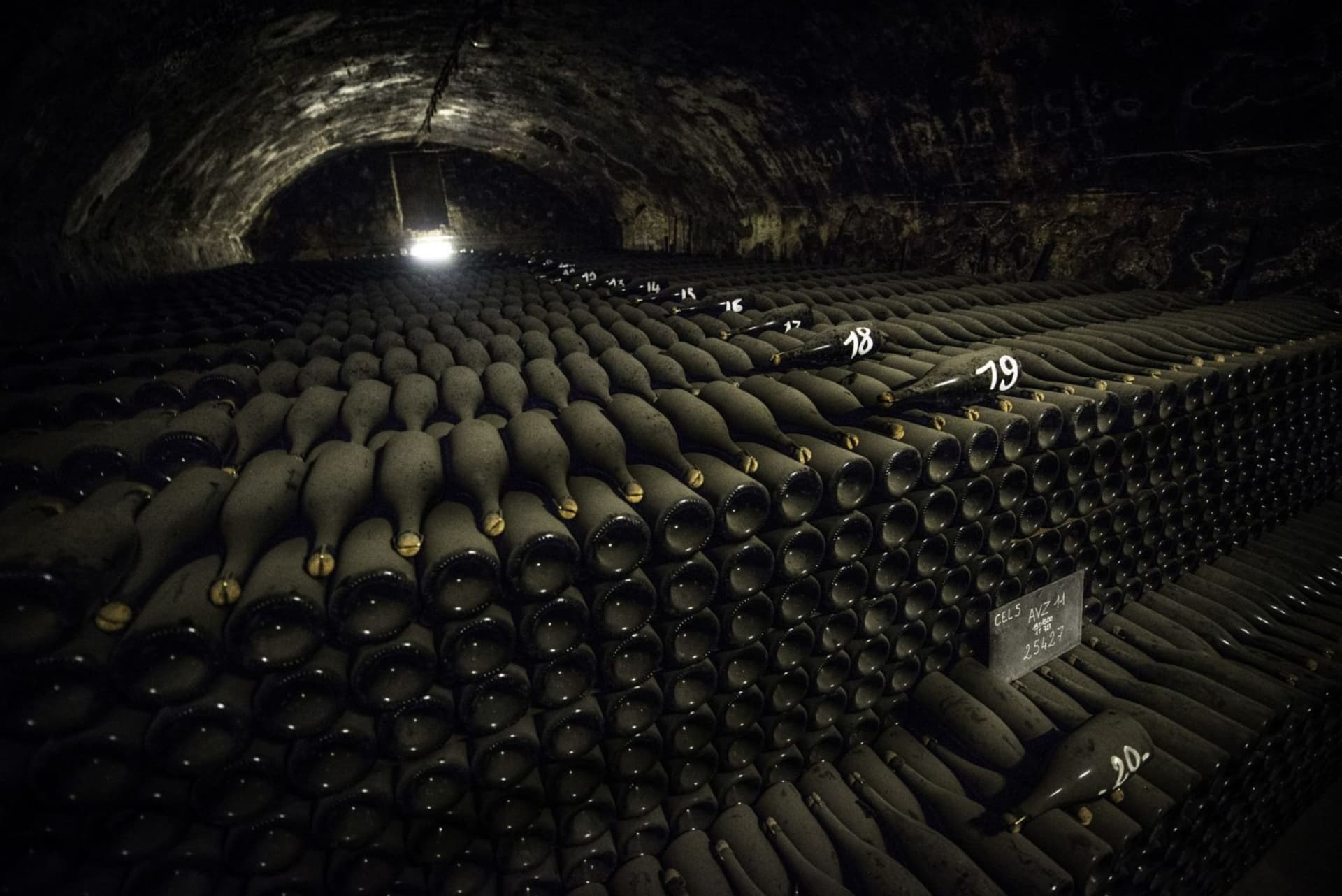
Bollinger is renowned for its stringent quality standards. It adheres to traditional methods, including individual vinification of each marc and cru, barrel fermentation (it is the last Champagne house to employ a full-time cooper) and extra-aging on the lees prior to disgorgement.
Members of the British Royal Court were among the first to embrace Bollinger’s unmistakable quality, and Queen Victoria made Bollinger the exclusive purveyor to the Court by Royal Warrant in 1884. Besides royalty, loyal devotees have included heads of state, celebrities and even famous fictional characters: Agent 007, James Bond, demands the exclusive Champagne Bollinger.

A term typically reserved for Champagne and Sparkling Wines, non-vintage or simply “NV” on a label indicates a blend of finished wines from different vintages (years of harvest). To make non-vintage Champagne, typically the current year’s harvest (in other words, the current vintage) forms the base of the blend. Finished wines from previous years, called “vins de reserve” are blended in at approximately 10-50% of the total volume in order to achieve the flavor, complexity, body and acidity for the desired house style. A tiny proportion of Champagnes are made from a single vintage.
There are also some very large production still wines that may not claim one particular vintage. This would be at the discretion of the winemaker’s goals for character of the final wine.

Associated with luxury, celebration, and romance, the region, Champagne, is home to the world’s most prized sparkling wine. In order to bear the label, ‘Champagne’, a sparkling wine must originate from this northeastern region of France—called Champagne—and adhere to strict quality standards. Made up of the three towns Reims, Épernay, and Aÿ, it was here that the traditional method of sparkling wine production was both invented and perfected, birthing a winemaking technique as well as a flavor profile that is now emulated worldwide.
Well-drained, limestone and chalky soil defines much of the region, which lend a mineral component to its wines. Champagne’s cold, continental climate promotes ample acidity in its grapes but weather differences from year to year can create significant variation between vintages. While vintage Champagnes are produced in exceptional years, non-vintage cuvées are produced annually from a blend of several years in order to produce Champagnes that maintain a consistent house style.
With nearly negligible exceptions, . These can be blended together or bottled as individual varietal Champagnes, depending on the final style of wine desired. Chardonnay, the only white variety, contributes freshness, elegance, lively acidity and notes of citrus, orchard fruit and white flowers. Pinot Noir and its relative Pinot Meunier, provide the backbone to many blends, adding structure, body and supple red fruit flavors. Wines with a large proportion of Pinot Meunier will be ready to drink earlier, while Pinot Noir contributes to longevity. Whether it is white or rosé, most Champagne is made from a blend of red and white grapes—and uniquely, rosé is often produce by blending together red and white wine. A Champagne made exclusively from Chardonnay will be labeled as ‘blanc de blancs,’ while ones comprised of only red grapes are called ‘blanc de noirs.’