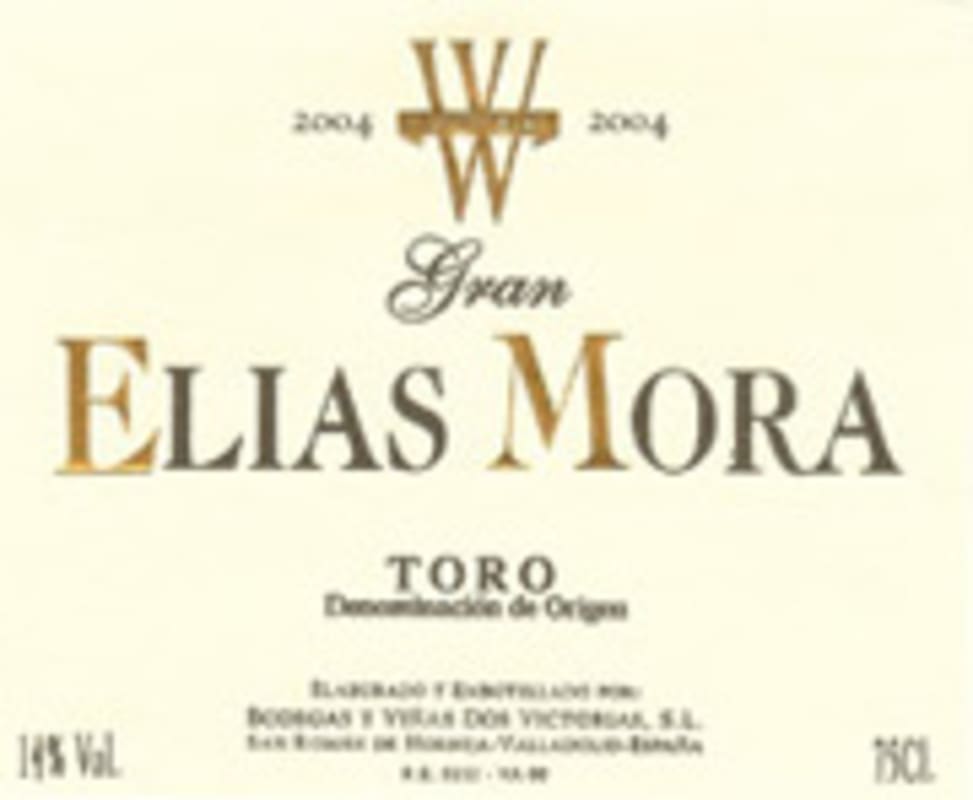

Winemaker Notes
"Senda de los Lobos is a famed vineyard in San Roman de Hornija, where this wine grows on 70-year-old vines planted in stony soil. The wine is pure minerals when first poured, dominated by a graphite flavor. Air reveals its complexity, the nuances of fig and clove, the generous core of blackberry and cassis flavors, all melded in a dense web of tannins. It's a great young Toro that needs at least five years to evolve."
-Wines & Spirits
"The 2004 Gran Elias Mora is similarly styled to the 2003 but more expressive and primary, especially aromatically. On the palate it is firm, tightly wound, with all the right stuff for future greatness. It has a pure finish that lasts for 45+ seconds. It demands 5-7 years of cellaring and should drink well through 2025."
-Wine Advocate
Professional Ratings


Spanish red wine is known for being bold, heady, rustic and age-worthy, Spain is truly a one-of-a-kind wine-producing nation. A great majority of the country is hot, arid and drought-ridden, and since irrigation has only been recently introduced and (controversially) accepted, viticulture has sustained—and flourished—only through a great understanding of Spain’s particular conditions. Large spacing between vines allows each enough resources to survive and as a result, the country has the most acreage under vine compared to any other country, but is usually third in production.
Of the Spanish red wines, the most planted and respected grape variety is Tempranillo, the star of Spain’s Rioja and Ribera del Duero regions. Priorat specializes in bold red blends, Jumilla has gained global recognition for its single varietal Monastrell and Utiel-Requena has garnered recent attention for its reds made of Bobal.