


Winemaker Notes
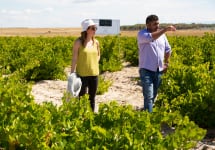
Triton is made with the Tinta de Toro grape, one of Spain’s oldest Tempranillo clones that is native to the Toro wine region. The continental steppe climate combines with the sandy soil to create a terroir that is responsible for a powerful, elegant, and mineral expression of Tinta de Toro. As all of Grupo Jorge Ordóñez’s vineyards, the plots are head trained and dry farmed, without the use of herbicides, pesticides, or fungicides.
Professional Ratings
-
Jeb Dunnuck
Made from 100% Tinta de Toro aged a year in used barrels (and some demi-muids), the 2017 Tritón comes from multiple vineyards and is made in decent amounts. It's a rich, powerful wine loaded with notions of blackcurrants, dark chocolate, licorice, crushed rocks, and crushed violets. It's full-bodied, has impressive depth of fruit, sweet tannins, and a great finish. It's a rocking wine that can be drunk today or cellared for 15 years or more.
-
James Suckling
An array of ripe dark-berry and raspberry aromas with biscuity nuances, as well as boysenberries. The palate has a sleek, essence-like feel. Such richness. Open-knit with soft berries. Very long and very ripe. Drink or hold.



Verdejo is one of Spain’s most historic white grapes, as it has been in production since the Roman times, several thousand years ago. After over fifteen years as the lead producer of quality Verdejo in Spain, Ordóñez chose Puras, Valladolid, as the best appellation within Rueda for growing Verdejo. This isolated corner of the D.O. is home to sandy soils intermixed with river stones that were deposited tens of thousands of years ago when the Duero river was several hundred miles wide. Due to the sandy soils, this sub-appellation of Rueda, shaped like Italy’s boot, resisted the phylloxera. Bodegas Ordóñez takes advantage of this unique terroir to produce wine from its ungrafted vineyards, the oldest of which was planted in 1885. Jorge’s philosophy is to age all of their wines sur lie and barrel fermented in both stainless steel and large format, mostly used French oak.

Notoriously food-friendly, long-lasting and Spain’s most widely planted grape, Tempranillo is the star variety of red wines from Rioja and Ribera del Duero. The Rioja terms Joven, Crianza, Reserva and Gran Reserva indicate both barrel and bottle time before release. Traditionally blended in Rioja with Garnacha, plus a bit of Mazuelo (Carignan) and Graciano, the Tempranillo in Ribera del Duero typically stands alone. Somm Secret—Tempranillo claims many different names depending on location. In Penedès, it is called Ull de Llebre and in Valdepeñas, goes by Cencibel. Known as Tinta Roriz in Portugal, Tempranillo plays an important role in Port wine.

Spain's remote, high elevation Spanish wine zone between the regions of Bierzo and Ribera del Duero produces intense, full-bodied reds made from Tempranillo, locally called Tinta de Toro. This local variant has adapted to the region’s climatic extremes and recognizing its potential, top producers from Ribera del Duero and Rioja have invested heavily in its vineyards.