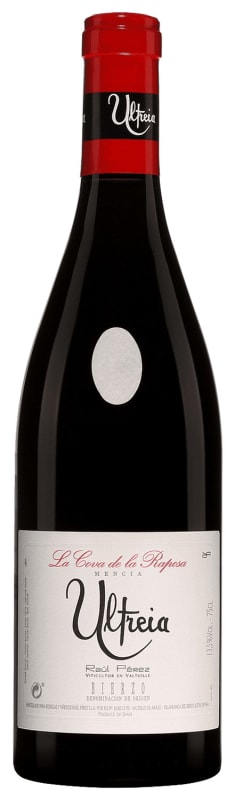


Winemaker Notes
Professional Ratings
-
Robert Parker's Wine Advocate
Cool vintages in warm zones seem to work, and it shows in the 2018 Ultreia Cova de la Raposa, which was not produced in 2017 because of the frost. There is only a 500-liter oak barrel, and the wine feels quite fine for the warmer exposure. The sandy soils produce stress in this vineyard, but in a rainier year like 2018, they are an advantage. This feels harmonious, with black rather than red fruit and some dusty tannins, a little more rustic and on the Rhône side more than Burgundy. It was bottled in December 2019.
-
Wine & Spirits
Since the late 19th century, the sandy soils of La Cova de la Raposa have sustained a mix of mencía, garnacha tintorera and bastardo growing at 1,935 feet in elevation. Pérez ferments this wine as whole bunches in large open barrels, then ages it in French oak. Its flavors of black currant and forest berry bring to mind a mountain forest, the luscious fruit intensity holding cool within its tannic structure, corralling that fruit in spicy green- peppercorn notes. A young Bierzo of power and grace.


Beyond the usual suspects, there are hundreds of red grape varieties grown throughout the world. Some are indigenous specialties capable of producing excellent single varietal wines, while others are better suited for use as blending grapes. Each has its own distinct viticultural characteristics, as well as aroma and flavor profiles, offering much to be discovered by the curious wine lover. In particular, Portugal and Italy are known for having a multitude of unique varieties but they can really be found in any region.

One of the few northwestern Spanish regions with a focus on a red variety, Bierzo, part of Castilla y León, is home to the flowery and fruity Mencia grape. Mencia produces balanced and bright red wines full of strawberry, raspberry, pomegranate, baking spice, pepper and black licorice. The well-drained soils of Bierzo are slate and granite.