

Winemaker Notes
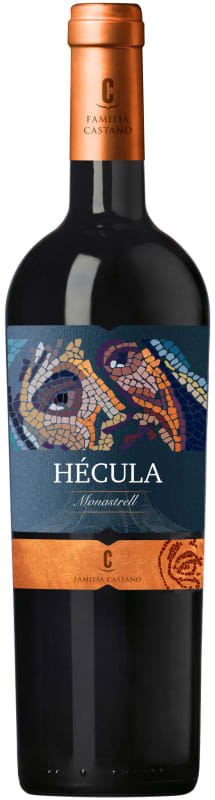
The 2015 Hecula shows an intense and shiny cherry red color. On the nose, it blooms pleasant ripe red fruit aromas, sweet spices. It has very elegant and integrated wooden notes that do not cover its intense fruitiness. It is well-balanced, fresh, with elegant soft tannins and a good acidity. Long and very well structured.
Professional Ratings
-
Robert Parker's Wine Advocate
The 2015 Hécula is pure old-vine Monastrell from dry-farmed, head-pruned vineyards on limestone soils within their Las Gruesas and Pozuelo estates in the higher part of the Yecla appellation. Different plots are fermented differently, and the wine aged for an average of six months in barrique. Stylistically, this is somewhere between the floral Monastrell and the more classic Casa Carmela, revamped, with a new image and with a cleaner nose and even some shy flowers. It's higher pitched than the more tarry Casa Carmela (even if I'm comparing different vintages) but not as much as the Monastrell and with less extraction and tannins than in the past. The palate is polished with some fine-grained tannins. 144,000 bottles produced.


Full of ripe fruit, and robust, earthy goodness, Mourvèdre is actually of Spanish provenance, where it still goes by the name Monastrell or Mataro. It is better associated however, with the Red Blends of the Rhône, namely Chateauneuf-du-Pape. Mourvèdre shines on its own in Bandol and is popular both as a single varietal wine in blends in the New World regions of Australia, California and Washington. Somm Secret—While Mourvèdre has been in California for many years, it didn’t gain momentum until the 1980s when a group of California winemakers inspired by the wines of the Rhône Valley finally began to renew a focus on it.

The Yecla DO sits between Jumilla and Alicante, near the Mediterranean coast of southeastern Spain and was granted official DO status in 1975. While once just a farming town, and later known as a furniture-making center, more recently, it is gaining notoriety for its red wine production.
A slow revolution in winemaking technology in Yecla since the 1980s, pioneered by small private wineries and cooperatives, has improved the quality of the region's red wines. The number of vineyards registered with the Regulatory Council is presently at about 6,000 hectares, and is still gradually increasing, a good indication that local producers are focused on quality. There are no official subregions, but the Campo Arriba district is well-known for producing grapes with more intensity and extract.
While Yecla produces a variety of wine styles, most are red wines based on single-varietal Monastrell or blends with other approved varieties such as Syrah, Merlot and Petit Verdot.
Yecla is already proving great export potential with about 95% of its production sold outside Spain, in over 40 countries worldwide.