


Winemaker Notes
Professional Ratings
-
Robert Parker's Wine Advocate
There is a new top-of-the-range red Garnacha, the 2014 Brega, produced with grapes from extremely old vines. It started fermenting in 2,500-liter stainless-steel vats and finished in 500- and 600-liter oak barrels (40% of them new), where the wine matured for 20 months plus a further eight months in neural, well-seasoned 600-liter barrels. 1,000 meters altitude on slate soils. This has a whopping 16.1% alcohol! It's heady, ripe and generously oaked, very smoky and a little meaty, with a slightly international profile as the ripeness and élevage made it a bit mainstream. The palate is full-bodied with abundant, dusty tannins and a dry, warm finish where the oak is still very noticeable, as is the alcohol. Give it more time in bottle. Very good in its oaky, end-of-the-1990s style. For fans of oaky reds. 6,240 bottles were filled in April 2017.



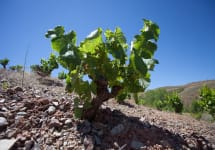
Located in the sleepy town of Munébrega, Bodegas Breca was founded by Jorge Ordóñez in 2010 with the mission of producing the finest Garnacha in Aragón. Garnacha de Aragón, the clone used to produce the wines of Bodegas Breca, is the most ancient and genetically untouched clone of Garnacha (Grenache) in the world. Garnacha was first cultivated in this northeastern corner of Spain and transplanted across the Mediterranean by the medieval Kingdom of Aragón, which had territories across the Mediterranean.
D.O. Calatayud has a unique, extreme terroir. The combination of radical altitudes, diverse slate soils, and drastic climate combine to create a completely unique mesoclimate. As Spain’s highest region to produce Garnacha, Calatayud frequently sees temperature swings of 45°F between day and night. In our mountainside vineyards (2600-3500ft.), our vines are oftentimes exposed to 40-100°F diurnal temperature swings in the summer. The heat allows the grapes to achieve full phenolic ripeness, and the cool nights build high acidity in the grapes. Due to its long vegetative cycle, Garnacha requires a relatively dry, hot climate to reach proper phenolic ripeness. The cold nights, dawn, and dusk, combined with a variety of slate dominant soils, allow the grapes to reach high levels of acidity. Our head trained vineyards were planted between 1900 and 1975, and as with all of the Grupo Jorge Ordóñez vineyards, they are dry farmed. These conditions produce exceptionally balanced wines with ageing potential due to their concentration and acidity.
Jorge Ordóñez pioneered the introduction of Garnacha into the United States in the 1990s, when Garnacha was the most widely planted grape in Spain. At the time, however, all the Spanish red wines available in the American market were Tempranillo dominant. Jorge recognized the quality of the old vine plantings of Garnacha and the wines they produced, and exposed the United States to these sensational wines.

Spanish red wine is known for being bold, heady, rustic and age-worthy, Spain is truly a one-of-a-kind wine-producing nation. A great majority of the country is hot, arid and drought-ridden, and since irrigation has only been recently introduced and (controversially) accepted, viticulture has sustained—and flourished—only through a great understanding of Spain’s particular conditions. Large spacing between vines allows each enough resources to survive and as a result, the country has the most acreage under vine compared to any other country, but is usually third in production.
Of the Spanish red wines, the most planted and respected grape variety is Tempranillo, the star of Spain’s Rioja and Ribera del Duero regions. Priorat specializes in bold red blends, Jumilla has gained global recognition for its single varietal Monastrell and Utiel-Requena has garnered recent attention for its reds made of Bobal.