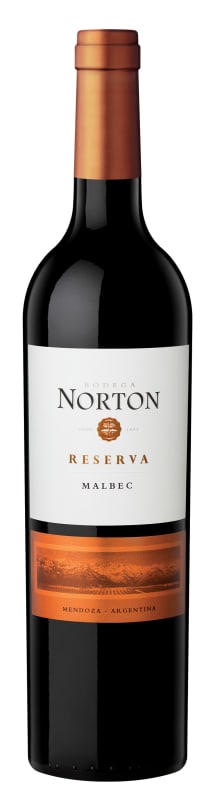


Winemaker Notes
Intense red color with purplish hues. In the nose, it is an expressive wine with ripe black fruits, violets, spices and tobacco. In the mouth, it is wide and fleshy with a lingering finish.
Professional Ratings
-
James Suckling
Nice mocha chocolate and sweet spices here, giving flattering complexity to the bright blackberries, dark cherries and violets. Juicy, bright fruit core, enveloped by fine-grained tannins.
-
Robert Parker's Wine Advocate
The 2020 Reserva Malbec shows the consistency of this bottling, one of the most important wines for Norton. Approximately 50% comes from Valle de Uco and 50% from Luján de Cuyo, and it matured in used barrels for one year. It has good ripeness, balance and elegance, integrated oak and very fine tannins. The consumer for this wine does not want differences from vintage to vintage; they want consistency of quality, and the 2020 is just a little riper than the 2021 that I tasted next to it. Best After 2022.


Celebrated for its bold flavors and supple texture, Malbec has enjoyed runaway success in Argentina since the late 20th century. The grape originated in Bordeaux, France, where it historically contributed color and tannin to blends. A French agronomist, who saw great potential for the variety in Mendoza’s hot, high-altitude landscape, brought Malbec to Argentina in 1868. Somm Secret—If you’re trying to please a crowd, Malbec is generally a safe bet with its combination of dense fruit and soft tannins.

By far the largest and best-known winemaking province in Argentina, Mendoza is responsible for over 70% of the country’s enological output. Set in the eastern foothills of the Andes Mountains, the climate is dry and continental, presenting relatively few challenges for viticulturists during the growing season. Mendoza, divided into several distinctive sub-regions, including Luján de Cuyo and the Uco Valley, is the source of some of the country’s finest wines.
For many wine lovers, Mendoza is practically synonymous with Malbec. Originally a Bordelaise variety brought to Argentina by the French in the mid-1800s, here it found success and renown that it never knew in its homeland where a finicky climate gives mixed results. Cabernet Sauvignon, Syrah, Merlot and Pinot Noir are all widely planted here as well (and sometimes even blended with each other or Malbec). Mendoza's main white varieties include Chardonnay, Torrontés, Sauvignon Blanc and Sémillon.