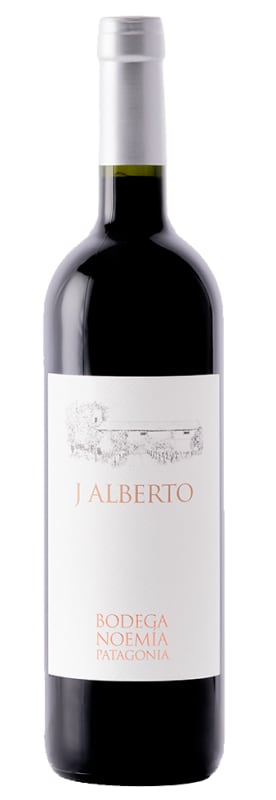


Winemaker Notes
These 4 hectares of vineyards were planted in 1955. The vines are massale selection, original rootstock ungrafted, so there is nothing clonal about these vines, and each one is genetically different from the other. The vineyard is composed of 95% Malbec interplanted with 5% Merlot. It is irrigated up to 4 times a year by traditional method of flooding, with water of maximum purity coming from the Río Negro, which is the soul of our valley. The vineyard does not receive any type of treatment, sprays or sulphites; it is certified organic.
Professional Ratings
-
James Suckling
A full-bodied red with olives, blackberries, wild blueberries, mussel shells and hints of licorice on the nose. Fresh and creamy, structured too, with a delicious saline minerality and fine, tea-like tannins. Drink or hold.


Celebrated for its bold flavors and supple texture, Malbec has enjoyed runaway success in Argentina since the late 20th century. The grape originated in Bordeaux, France, where it historically contributed color and tannin to blends. A French agronomist, who saw great potential for the variety in Mendoza’s hot, high-altitude landscape, brought Malbec to Argentina in 1868. Somm Secret—If you’re trying to please a crowd, Malbec is generally a safe bet with its combination of dense fruit and soft tannins.

One of the most southerly regions on the globe for fine wine production, Patagonia has experienced extraordinary vineyard expansion since the early 2000s.
Patagonia vineyards occupy the lower foothills of the Andes at 1,000 to 1,600 feet. Here cold air drops at night from incredibly steep elevations—the Andes reach well over 15,000 feet in this zone—a phenomenon that produces drastic diurnal shifts. Cold nights contrasted with hot summer days produce grapes with striking color, full ripeness, great finesse and aromatic intensity.
Favored for its luxury brands, the Patagonia wine growing region of Argentina focuses on a diverse array of international varieties: Chardonnay, Sauvignon Blanc, Semillón and Viognier among the white grapes, and Cabernet Franc, Malbec, Merlot, Pinot Noir, Syrah and Cabernet Sauvignon for reds.