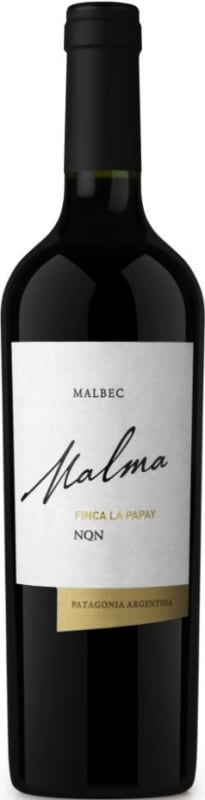


Winemaker Notes
Professional Ratings
-
James Suckling
Aromas of fresh porcini mushroom, dark berry and earth follow through to a full body with soft and velvety tannins and a juicy finish.
-
Wine & Spirits
From vines planted in 2001 in San Patricio del Chañar, in the Neuquén region, this is seductive in its flavors of violets and ripe strawberries, charming in all its aspects. The aromas may be lush, the texture, soft, round and voluptuous but the wine is not at all tiring. The perfect steakhouse red. Vias Imports, NY


Celebrated for its bold flavors and supple texture, Malbec has enjoyed runaway success in Argentina since the late 20th century. The grape originated in Bordeaux, France, where it historically contributed color and tannin to blends. A French agronomist, who saw great potential for the variety in Mendoza’s hot, high-altitude landscape, brought Malbec to Argentina in 1868. Somm Secret—If you’re trying to please a crowd, Malbec is generally a safe bet with its combination of dense fruit and soft tannins.

One of the most southerly regions on the globe for fine wine production, Patagonia has experienced extraordinary vineyard expansion since the early 2000s.
Patagonia vineyards occupy the lower foothills of the Andes at 1,000 to 1,600 feet. Here cold air drops at night from incredibly steep elevations—the Andes reach well over 15,000 feet in this zone—a phenomenon that produces drastic diurnal shifts. Cold nights contrasted with hot summer days produce grapes with striking color, full ripeness, great finesse and aromatic intensity.
Favored for its luxury brands, the Patagonia wine growing region of Argentina focuses on a diverse array of international varieties: Chardonnay, Sauvignon Blanc, Semillón and Viognier among the white grapes, and Cabernet Franc, Malbec, Merlot, Pinot Noir, Syrah and Cabernet Sauvignon for reds.